

With short days and sometimes less-than-favourable weather, the winter season is often the time when many choose to stay indoors, hanging up their gear until spring returns and the world ventures outdoors once again.
However, winter is a wonderfully calming time of year to spend outside – especially in woodland. There is a quiet and restful feeling amongst the trees as the summer visitors have departed for the year, there is an atmosphere of anticipation and activity if you look closely though. The creatures of both fur and feather are busying themselves foraging and often a blackbird can be heard rummaging amongst the leaf litter for worms and other morsels. Deer are easier to spot without the dense vegetation to hide amongst, though their winter coat provides effective camouflage for the untrained eye.
In this blog, let us explore some of the skills and activities that we as a team focus on during the Winter months; for this is the best time of year to really practise and hone our bushcraft skills plus how we relish the opportunity for mother nature to thoroughly test them. As Ray Mears says, “If you only go outdoors in the summer, you are potentially missing out on three-quarters of a lifetime”.
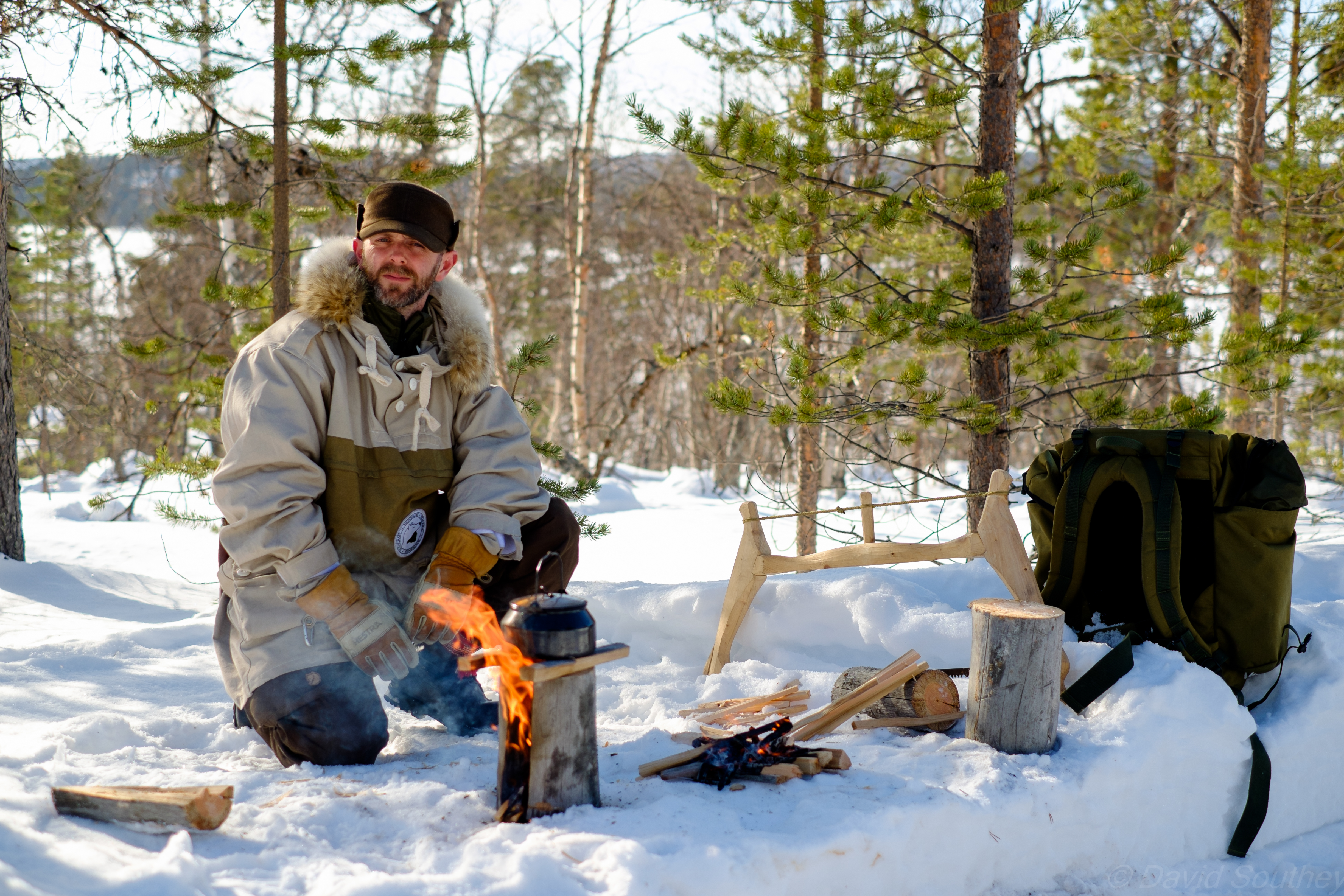
At Woodlore, we teach Wilderness Bushcraft and where this approach differs from some is that we gear everything towards the extreme. We train, learn, prepare and practise with the mindset of being in truly remote and wild places – therefore our skills, knowledge and equipment must be of the highest calibre.
Our skill set must be utterly reliable and have been tested in the worst of weather whilst under pressure; for example, creating fire by friction is a challenge to obtain and we begin to learn in the summer with excellent wood selection and time a-plenty. Once learned in more favourable conditions, we will seek the worst of weather to practise in -the technique is learned with a variety of woods, with natural cordage for the bow, with a time pressure and fire must be created when the rain is lashing about us, the wind howls under our collar and the cold numbs our fingers.
Now we are confident that we can summon fire within a few minutes, for we select the best woods and understand their nuances alongside which tinder may be used and how it is to be prepared, our technique has been practiced and the sum of this being that fire is born – perhaps one day this skill may be pressed in to service to save a life on a canoe trip of an unfortunate casualty who has fallen into frigid water.
This skill resides in both our mind and muscles and becomes part of our ‘toolkit.’ However, it is perishable, so regular practice is essential. Fortunately, every winter provides another opportunity to hone it!
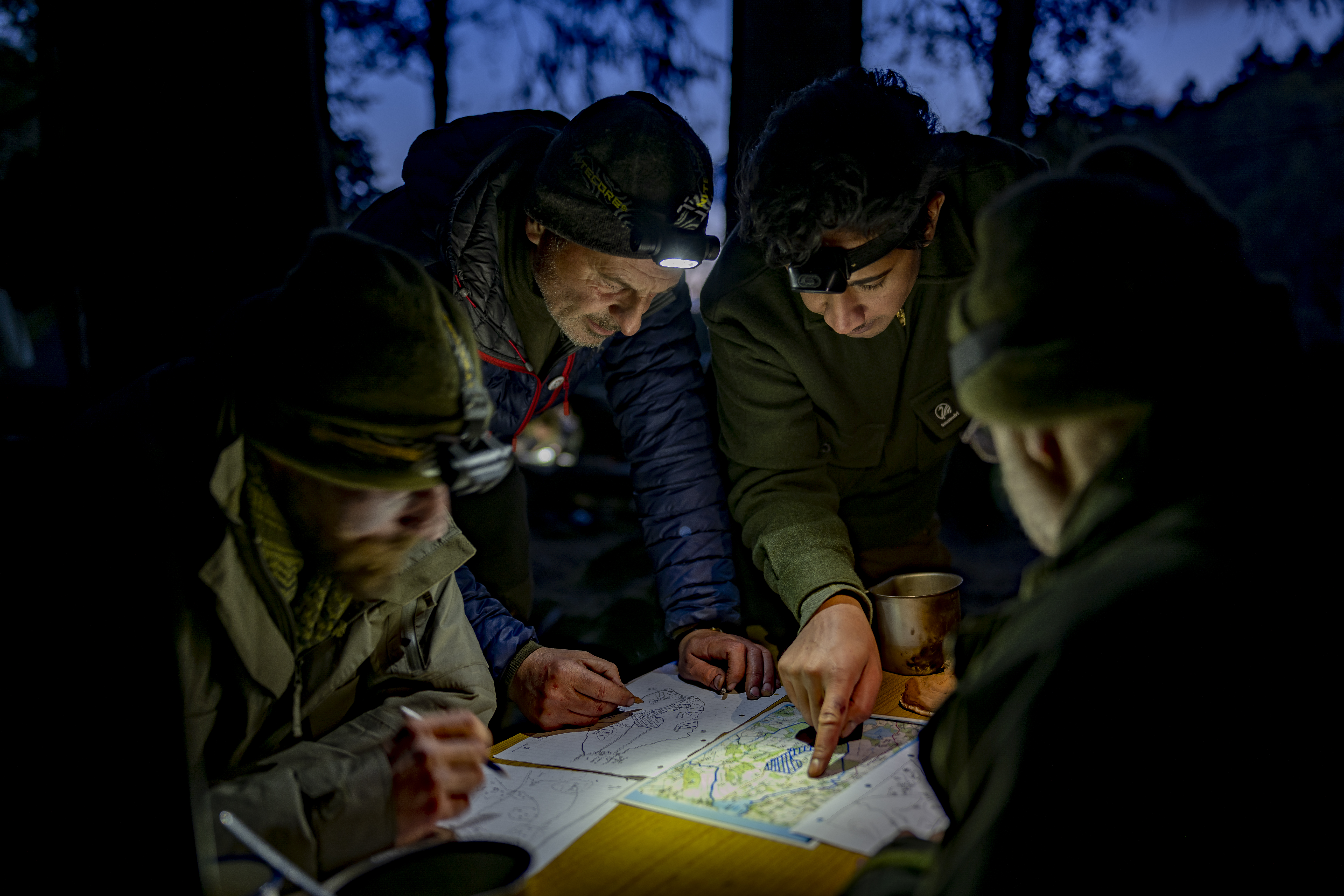
Night navigation becomes easier to practice regularly in winter, as the early onset of inky darkness provides ample opportunity to master this essential skill.
One may begin by walking the same routes as in daylight, noticing how the trees silhouette against the sky or torchlight, how reflective dense areas of bramble or thickets become, feeling the contour of the land beneath one’s feet and using this to plot a position upon a map. Without the ability to see distance and landmarks our world becomes confined to our night vision, torch light, map and trusting our compass.
Upon reaching open ground and taking a bearing from the map to a point in the landscape, we employ techniques such as aiming off, pacing, timing, and dead reckoning. All of these skills are first accomplished in daylight but must now be trusted and refined to become a proficient nocturnal navigator.
Steadily, as our route lengthens and confidence is gained, using our senses, our knowledge of contours, the sound of a babbling stream to our western side perhaps steering us on a northerly course become second nature.
Why is this an essential skill though?
Every year countless stories abound from Mountain Rescue in Britain of unfortunate souls becoming lost and disorientated in the hills, some far from help and some very close to the car park in which they alighted hours before. Many have only endured uncomfortable nights spent in the cold and found their way safely back in the daylight. Sadly, some do not return.
The ability to navigate in all conditions allows for safe exploration as a leader, a lone traveller or as a group. It ensures that everyone returns from an activity safely and can extend days whilst on expeditions and adventures.
At the start of expeditions, whether arriving in distant locations around the world or closer to home, it is often dark when we must locate our campsite, find safe drinking water, reconnect with companions, identify the trailhead, or steer clear of danger zones.
Learning navigation truly is the key to the wilderness!
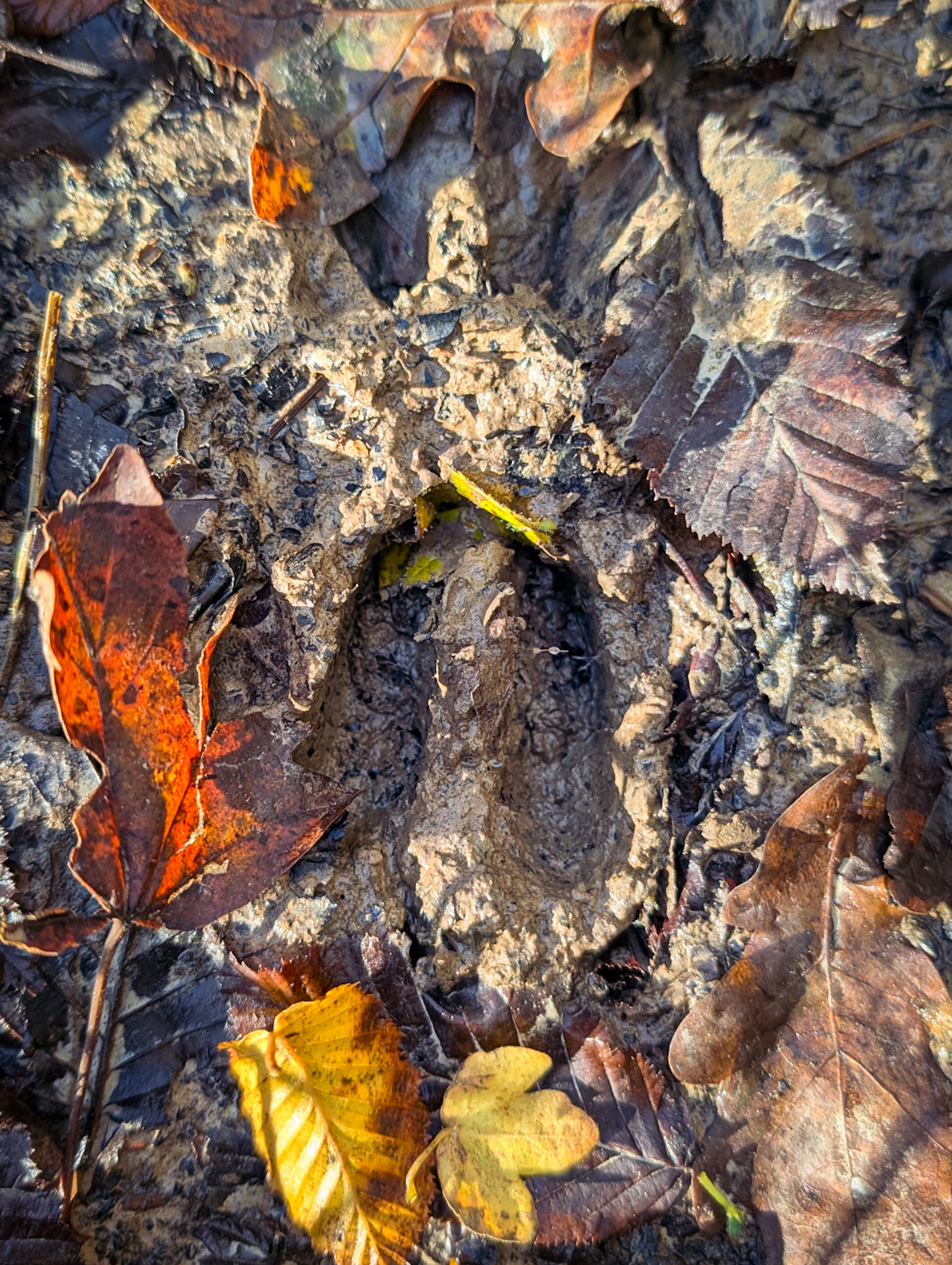
The art of tracking is indeed a rewarding and immersive skill that requires attention to detail, a knowledge of the behaviour and movements of the beast in which you attempt to follow and a broad knowledge of habitat, feeding patterns, nesting, breeding and so on. It forces you to take account of all that nature is showing you. And then to determine it’s meaning.
Whether we follow and track animals for hunting, pleasure, photography, to watch their behaviour or simply for the joy of getting close to them whilst they unsuspectingly browse, practice, as usual, makes perfect.
The softening of the ground from the seasonal rains permits us to better spot the imprint of animal tracks, study their relief and determine characteristics within the track at far greater detail than in the arid conditions of the summer. In some respects, tracking in winter is the easier time of year as the sign, or spoor, is left more readily for us to find.
This greater detail being presented to us allows a more in depth look into the animals track and it’s behaviour, from this we may determine routines and feeding sites, resting sites, trails and so on. This allows us to attune to the comings and goings of these creatures and better understand the space in which they inhabit.
As the warmer seasons come around we may use this knowledge to create a more rounded view of the animal in our own mind. We know that badgers are hygienic animals and use a latrine area, they dig a small hole, deposit their droppings and leave the hole un-filled to return several times – we can find their tracks and be led to this site. Now the droppings can be examined and discover what they have been feeding on – is it purely earth worms or a mixture of berries, seeds or insects? Are they feeding upon the root bulbs of bluebells and have discarded some like half crunched pickled onions?
Tracking therefore is not only the ability to spot a footprint and identify it – but it is a way of being that the outdoors-person adopts in which to learn more about the natural world for self interest, for guiding and for a broader understanding of the animal kingdom.
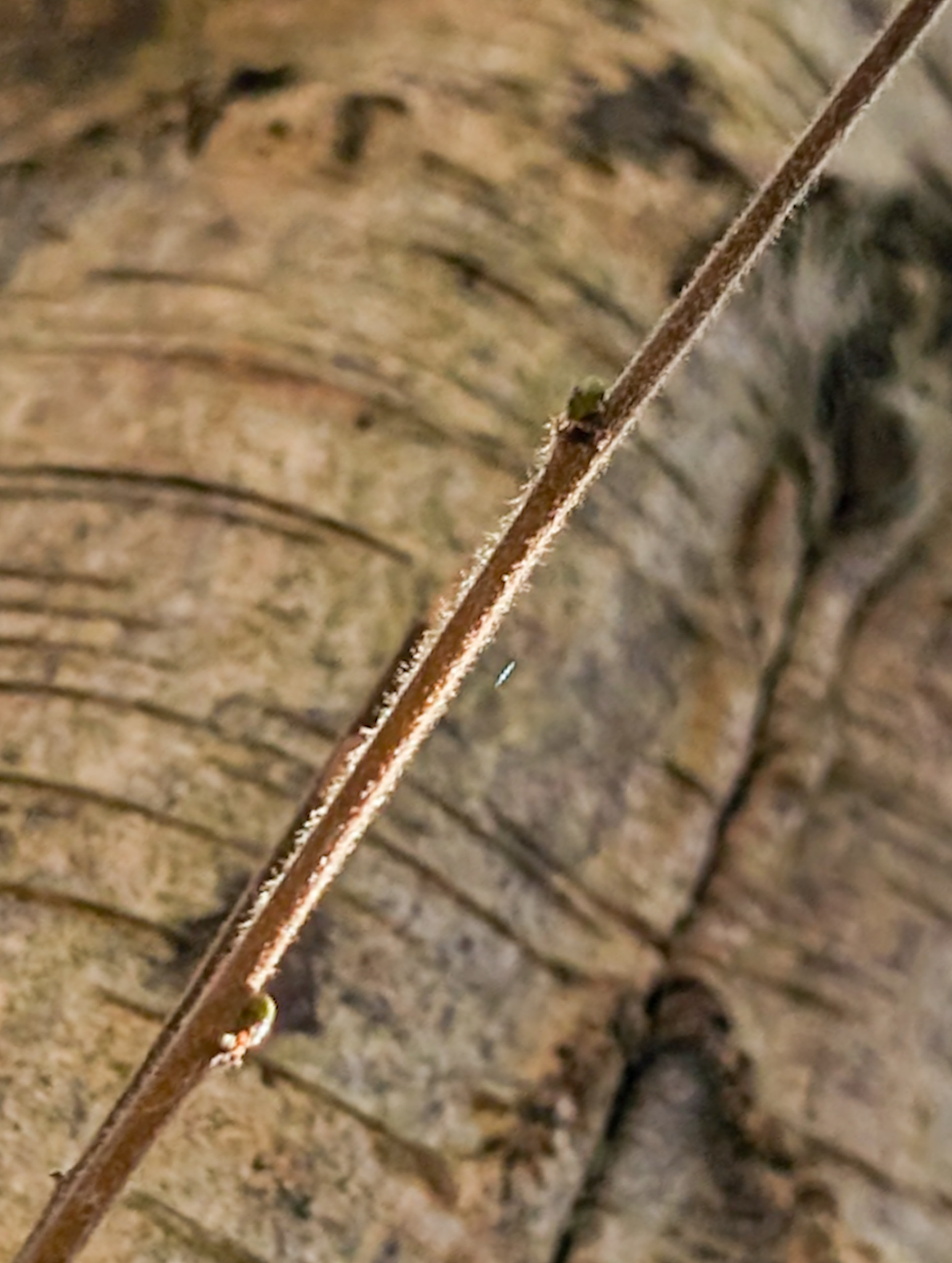
For us, the real joy of bushcraft lies in using natural materials and embracing the principle of “carrying less requires knowing more”. This philosophy drives us to learn as much about the trees and plants around us so that we may call upon the resources found at every turn.
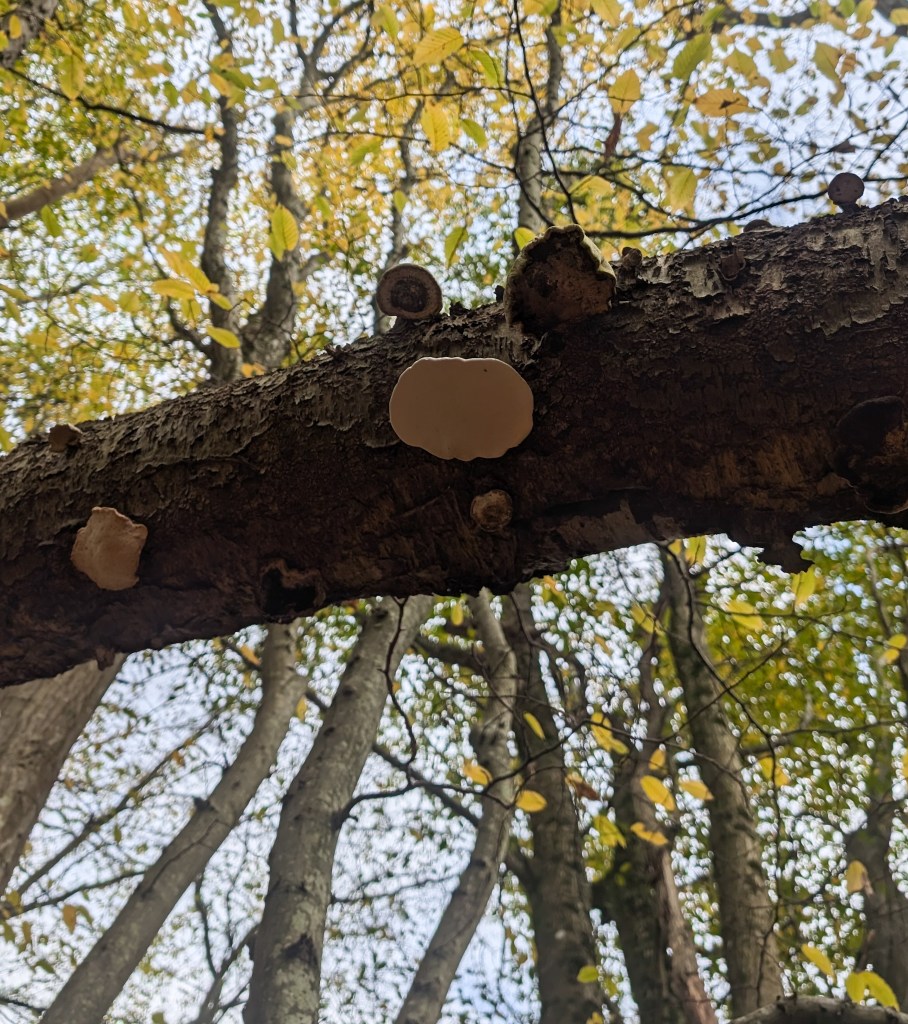
From the plants, trees and fungi about us we become able to feed ourselves, produce fire to cook our food, navigate unfamiliar terrain, and carve items of elegant practicality – the possibilities are limited only to imagination.
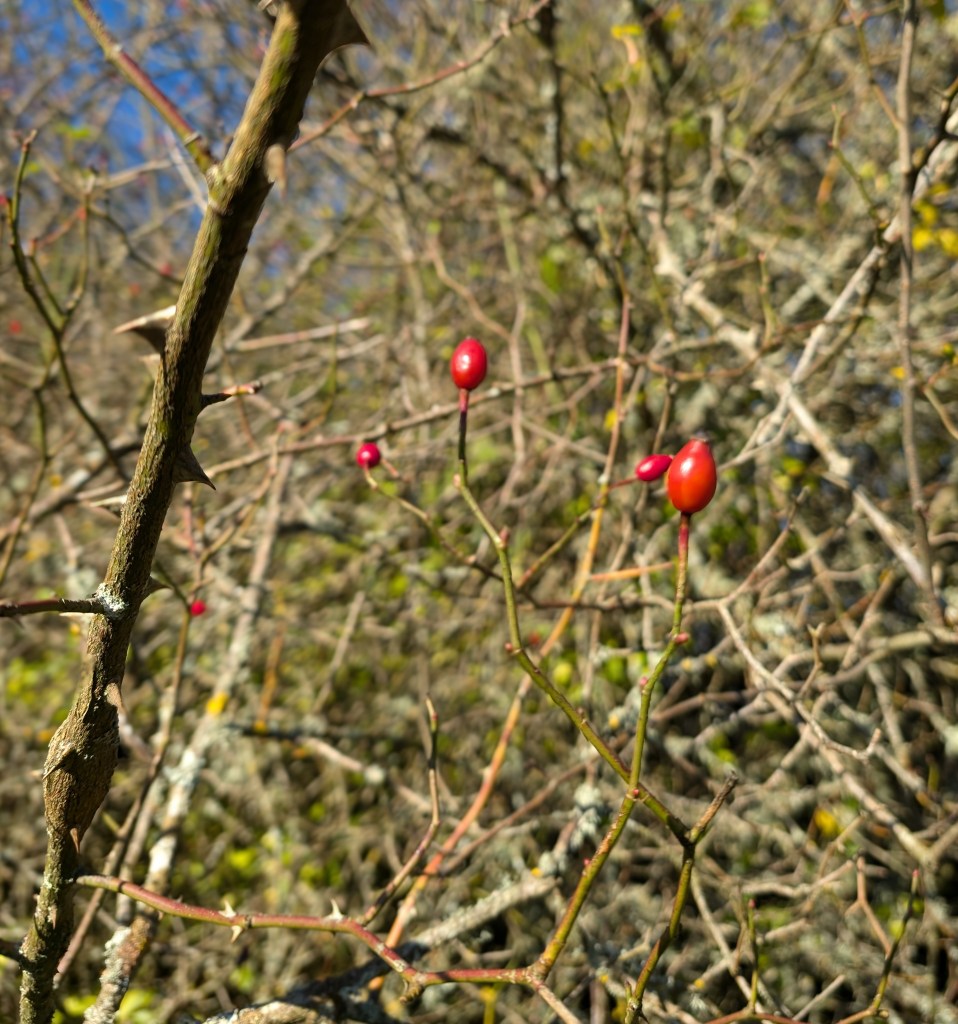
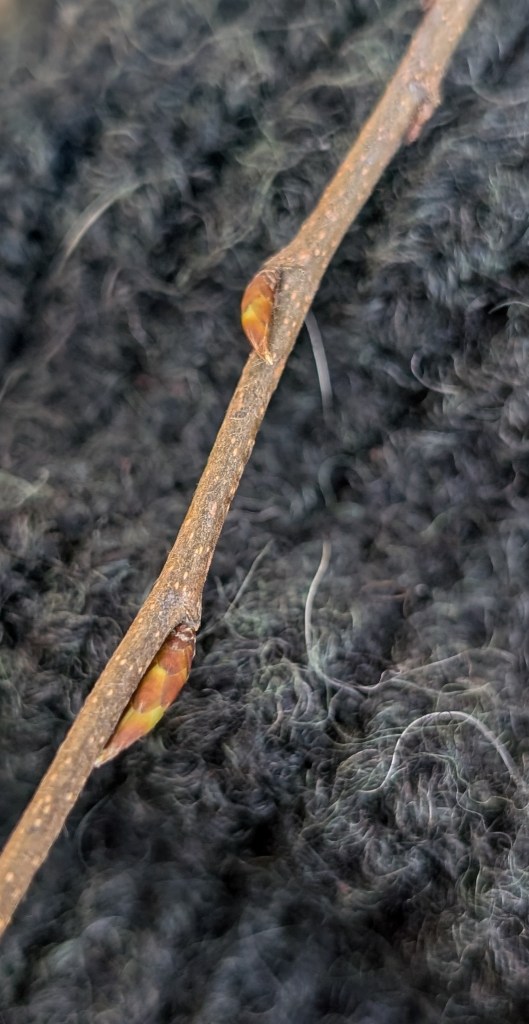
When the deciduous trees of temperate regions have shed their leaves in Autumn a sigh of silence comes over the woodland. The summer growth recedes, and the vegetation dies back leaving, apparently, nothing to look at but brambles and grass and brown leaved bracken or stalks of stinging nettles in clumps around the edges of bare trees. But investigate closer and you will find the beginnings of a huge variety of plants laying out their ‘rosettes’ for the next growing season and buds beginning to swell upon the tree branches.
Winter provides a fantastic opportunity in which to learn the species ‘out of season’ – when they do not have the more obvious identifying features such as flowers, leaves, fruit, seeds and a multitude of specimens in which to study. If we restrict our learning to the spring and summer only, we limit ourselves to just a few short windows of opportunity over a lifetime.
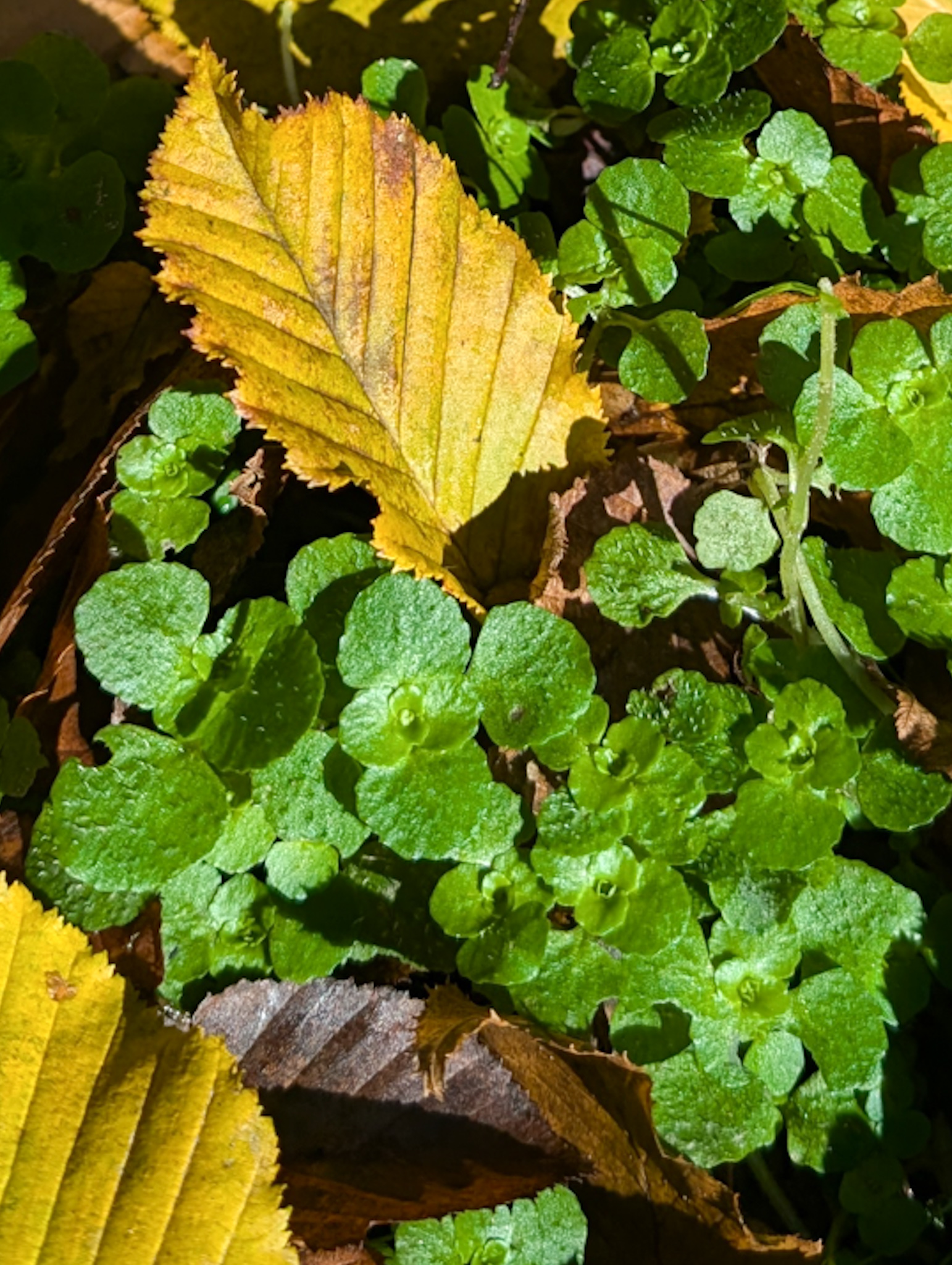
Opposite leaved Golden Saxifrage (Chrysosplenium oppositifolium) can be found through the winter in damp woodland very close to streams and running water. Come the spring and summer it shows with tiny golden flowers. The leaves are slightly more robust and hairy at this time of year but is still a worthwhile edible. In the summer months, when everything else is in bloom and reaching for the sunlight this small delicate plant can be missed.
By learning the overall characteristics of these plants and trees alongside the habitats in which they grow in, the shape of different trees crowns or the way their branches hang, enables us to spot them as old friends and perhaps call into service their resources. At a glance we can tell from afar the willow tree, the spray of the birch crown, the solid oak tree in the woodland canopy and the broad beech tree. Now we may find fire, cooking utensils, water, food and shelter.
Winter is an incredible season of wild weather, stunning landscapes, hardship, comfort and of learning. Though the days are short and the nights long, this time of year invites reflection and creativity. With a little inspiration, it offers a wealth of activities to indulge in and skills to develop too, as we hope we have shown you.
Bushcraft is often likened to a wagon wheel, with the hub being central skills and an attitude towards the outdoors with the many spokes coming off from this leading to different interests and pursuits. We may walk along one and cross to another but this subject is truly amazing in that there is never a shortage of things to learn the year and world round. Even if it is a little wet and cold sometimes …
You can join Woodlore and Ray Mears for a whole host of courses and expeditions at http://www.raymears.com
Callum Hilder – Aspirant Instructor and Marketing Manager

 The Ray Mears & Woodlore Bushcraft Blog