

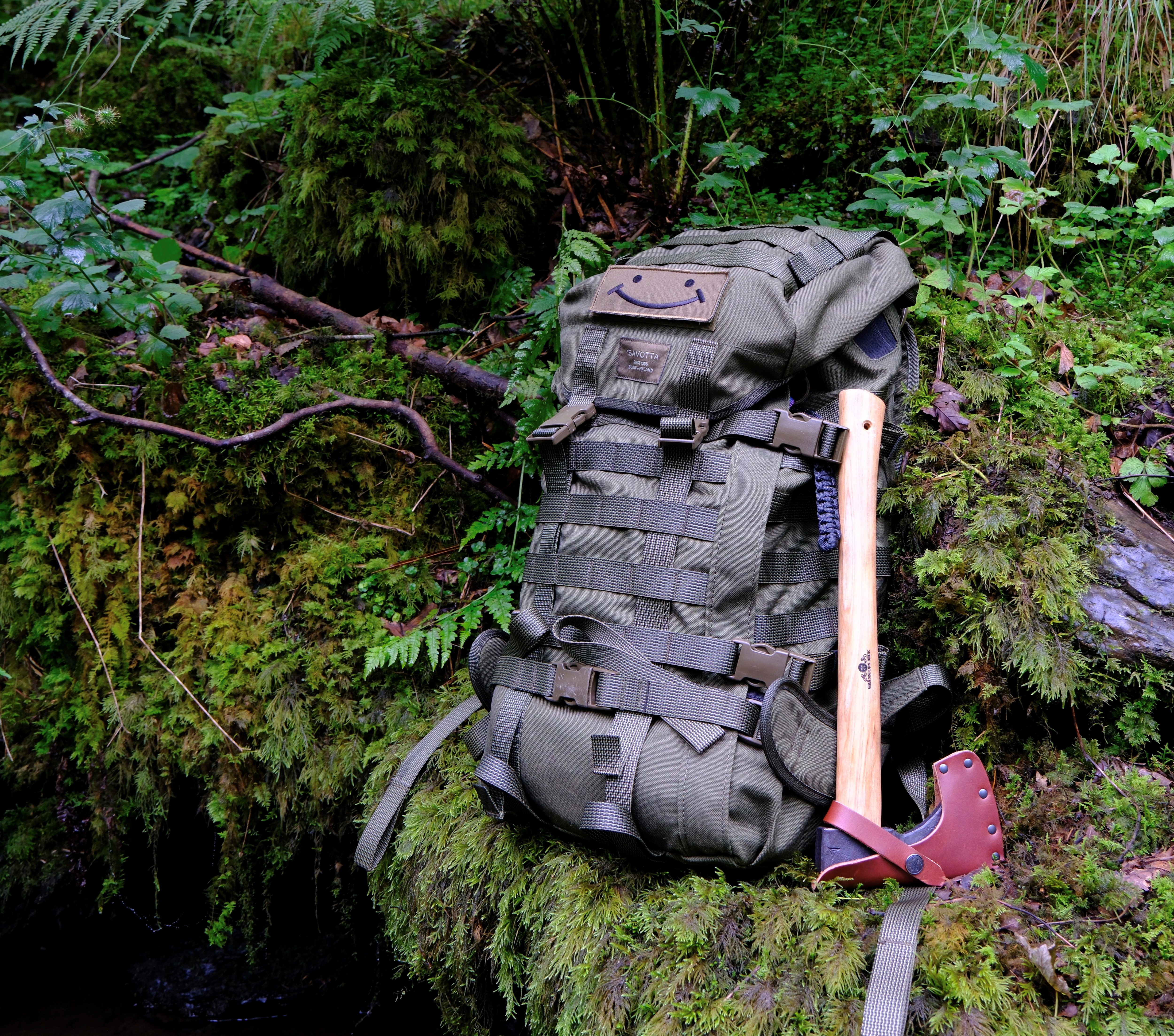
If you imagine an axe, perhaps you see a burly splitting maul, its weight promising to cleave logs with ease, or maybe the elegant sweep of a long-bearded carving axe, poised for delicate work. For me, the mental image is singular and personal: the small forest axe that has been my steadfast companion around countless campfires for the better part of two decades. No matter what axe you envision, I suspect your mind’s eye pictures it simply—an unpainted head, just the edge gleaming from a careful polish, an unlacquered, oiled handle, and that distinctive Gränsfors Bruks logo stamped toward the poll.
For so many bushcrafters, Gränsfors Bruks is THE axe manufacturer. This is why on a recent trip to Sweden, I spent three hours driving north from Stockholm on a pilgrimage to the factory. I wanted to see how they combine traditional and modern skills during production and have a go at making my own axe the old fashioned way – using a hammer and anvil.
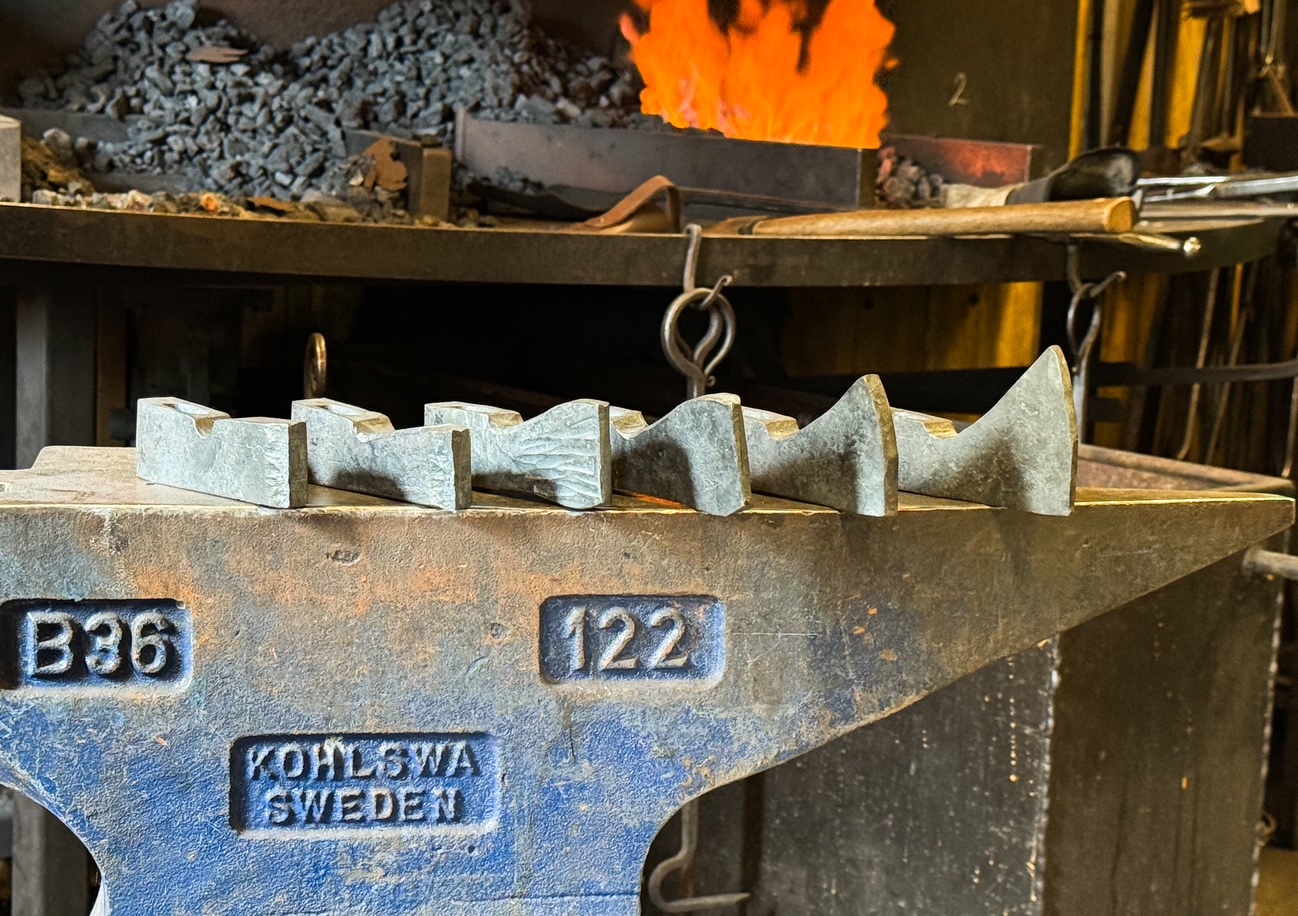
The fortunes of Gränsfors have ebbed and flowed over the years. The invention of the chainsaw hit the whole of the axe industry hard and in the mid-1980s, the company went bankrupt. However, fortunately for bushcrafters everywhere, a local businessman already running a forge producing wrecking bars bought the company.
To this point, as with all other axe manufacturers, the focus had been on efficient production of axes at the lowest possible cost. Workers were paid by the piece and grinding, polishing, and painting were used to hide any faults. The company philosophy quickly changed, with workers becoming salaried employees and the smiths given the ultimate accountability for their work by stamping their initials in the head, with the full names being available to check on the Gränsfors website (my small forest axe was made by UN – Ulrik Nilsson). Manufacturing became quality driven, and if an axe doesn’t meet their high standards it can be removed by any person involved in the process.
In addition to improvements in quality, continuous effort has been spent in product research and development. A good example of this is the Ray Mears Wilderness Axe, developed between Ray and Gränsfors, as something like the big brother of the Small Forest Axe.
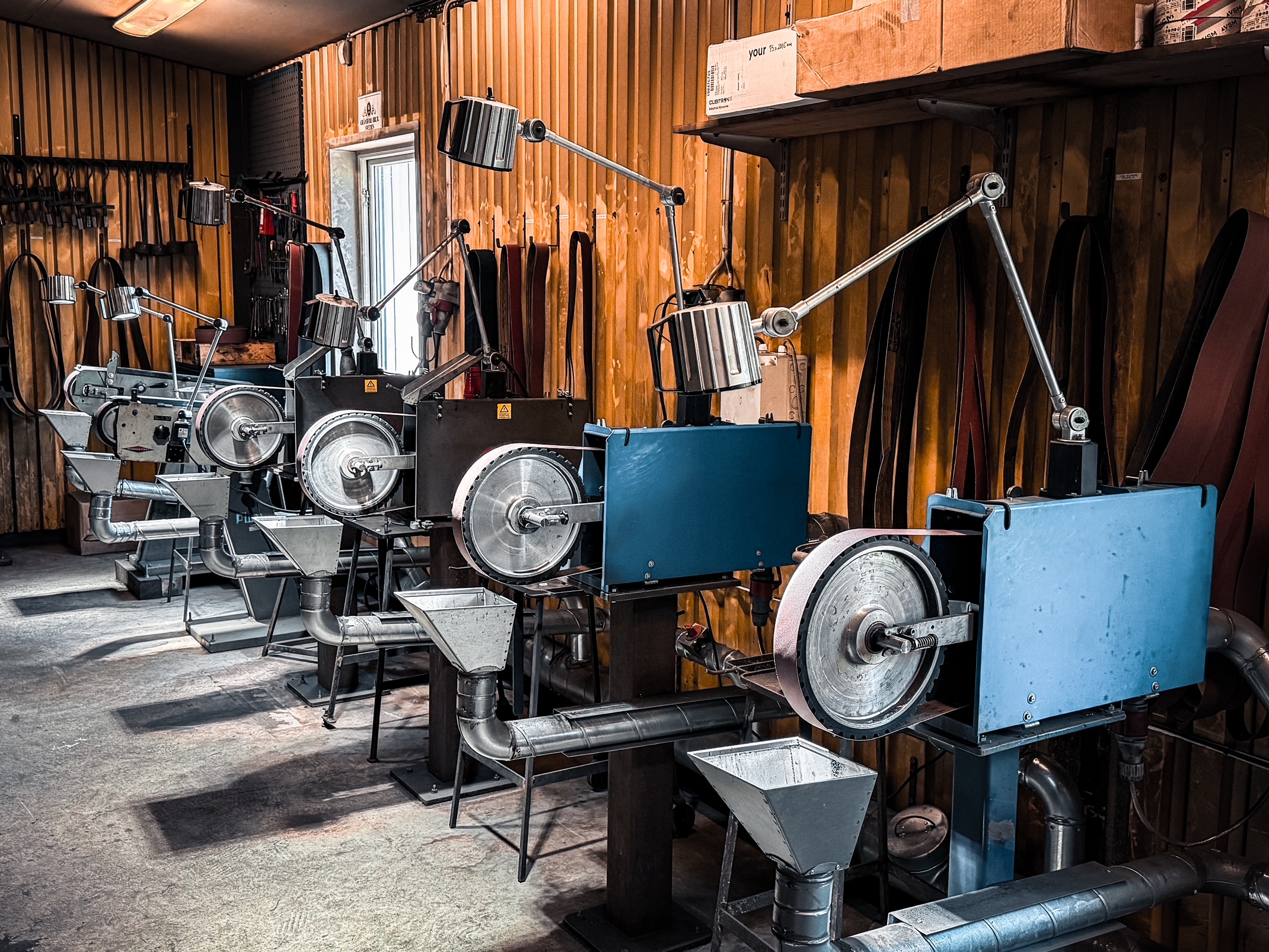
As to the factory, it’s far from the hot, dirty, and smoky environment I had pictured. Modern and more environmentally friendly induction forges heat the proprietary blend of recycled steel to 1200°C. A highly skilled smith then starts working the yellow-hot material through the specially designed presses. This is far from mass production, one slip or misplaced piece will mean the head gets thrown into the rejects bin, before being returned to the steel manufacturer for another round of recycling. With the need to match the rhymical thumping of the presses the movement of the smiths resembled a precise and well-practiced dance. This level of skill and attention to detail was mirrored at every following step, from forging, through to grinding, hardening, tempering, sharpening and finally adding the handle.

But what of my attempt to make an axe? Now this was in an environment that aligned with the traditional view of a blacksmith. The forge was hot and noisy, particularly with ten novice axe makers bashing away at their anvils. Two days gives you a pretty tight timescale to make an axe from scratch if you’ve never done it before. We were fortunate to have a wonderful instructor, Sam, very ably assisted by his deputy Martin. Watching Sam at the forge it looked easy. He worked quickly and accurately, every blow of his hammer landing in the right place, and the glowing steel eager to cooperate. His instructions couldn’t have been clearer.
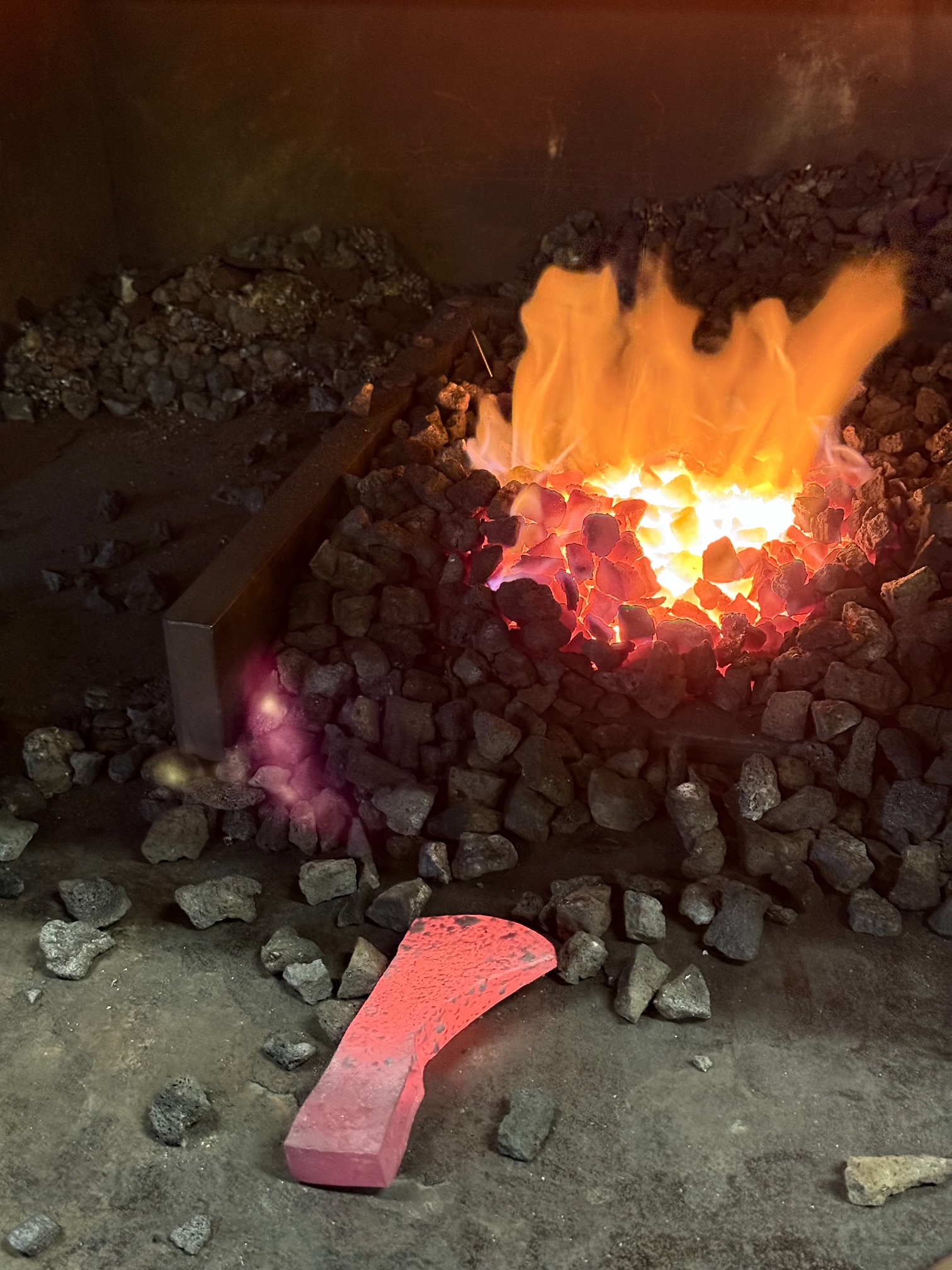
And then it was my turn. I’d pick up the head from the forge, place it on the anvil, only to realise I’d forgotten where my hammer was. By the time I’d found it, I’d lost my heat, and hammer blows would glance off rather than making an impact. When I did have my hammer ready, my steel was like a teenager, wilfully doing the opposite of what I’d hoped. Reflecting on this during the welcome fika breaks, it reminded me of watching Ray and other Woodlore instructors make fire by friction. In their hands, a bow drill seems both straightforward with an inevitable positive outcome. It’s only when you try it yourself you realise how many hours have been spent to make it look that easy.
Thankfully, Sam and Martin were more than able to help us out at our various sticking points. At the end of the two days, we were all going home with legitimate looking camp axes, razor sharp and capable of slicing paper by being wafted over it. I was actually the very proud owner of two new axes. Sam was generous enough to award the “most promising smith” the textbook demonstration model he’d made in front of us (OK… I admit it, we drew straws). I wonder if you can tell who made which…

Standing in the packing room, watching the axes being boxed up before being sent all around the world, I couldn’t help but wonder what sort of adventures and projects they would become an essential part of.
Rhys Williams, Woodlore Assistant

 The Ray Mears & Woodlore Bushcraft Blog