
A Conversation with Ray Mears
I was recently lucky enough to catch Ray between one adventure and another and took the chance to ask a few questions about something deceptively simple: the compass case. What followed was a wide-ranging conversation, moving from craftsmanship and materials to navigation, reliability, and the quiet confidence that comes from understanding the land.
Lisa: So, it’s World Leather Day and I’ve caught you to have a chat about one of your favourite leather items that we make here at Woodlore; the Compass Case. Can you tell me a bit about its history and how we came to make them?
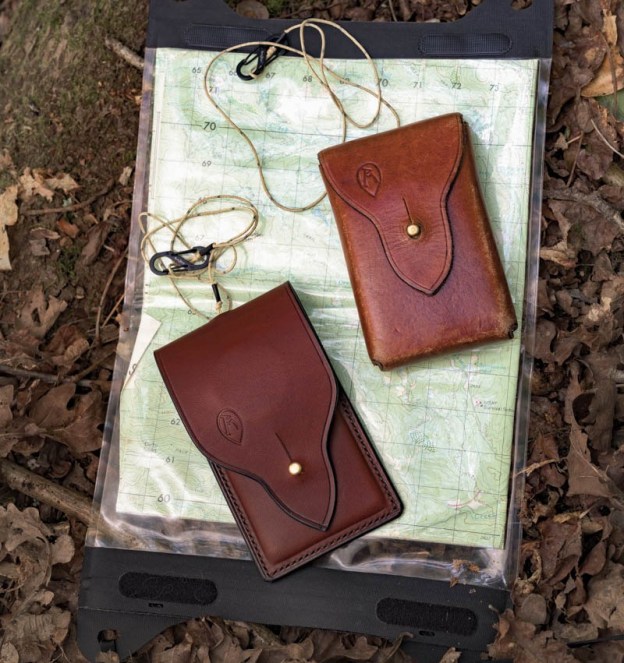
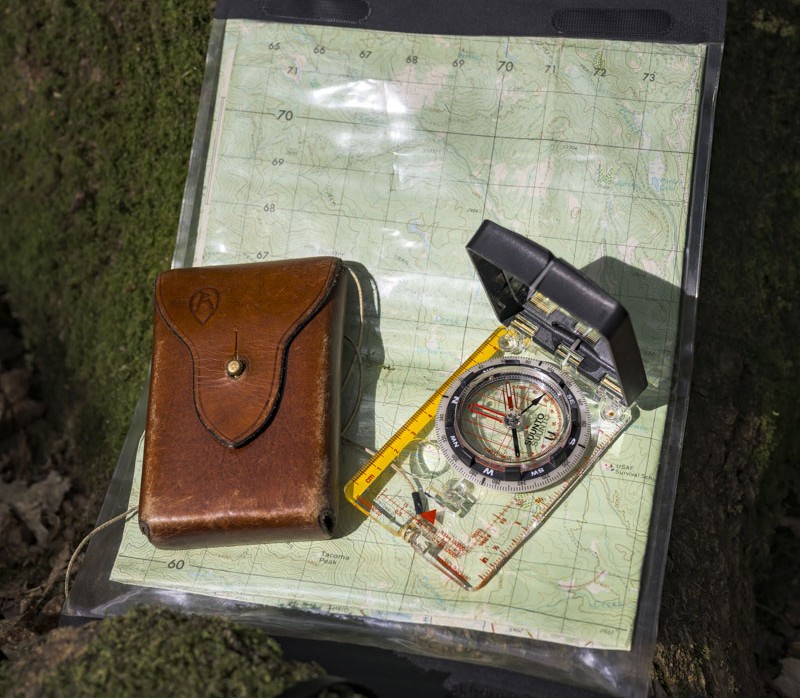
Ray: Many years ago, I came across compass cases made for Silva compasses. They were beautifully crafted. Over time, as manufacturing costs changed, those details were lost, and today, most compasses don’t come with a case at all.
It struck me that this was something worth bringing back. A compass is a precision instrument; I call it the key to the wilderness. It deserves protection.
Rather than replicate the old designs exactly, I wanted something with a bit more elegance, something that reflected the best of traditional English leatherworking. So, I asked our leatherworker to develop a design, and what we ended up with is both practical and beautiful.
You can wear it on your belt or thread a lanyard through the lid, so it stays attached to your breast pocket. That’s how I tend to use it, secure, protected, but always to hand.
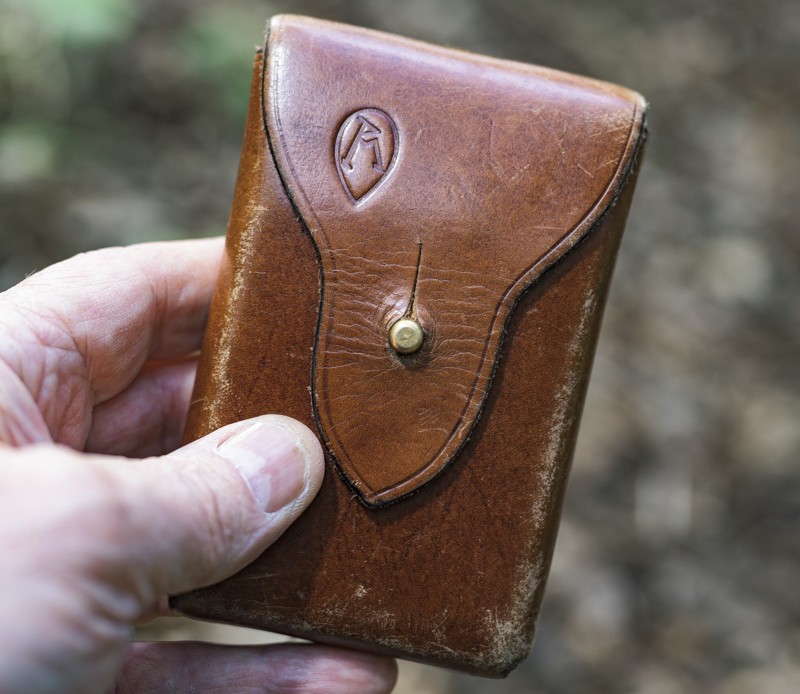
It’s one of those pieces of equipment you don’t really notice; it just quietly does its job. Mine’s developed a lovely patina over the years, with scratches and marks that show exactly what it’s protected my compass from. In fact, I think my case has outlasted three compasses, and it’ll probably outlast me.
That idea, of something outlasting the tool it protects, is central to how we think about good equipment.
Lisa: How long have you had your compass case?
Ray: A long time, many years. It’s travelled thousands of miles with me, tens of thousands if you count flights. It’s been with me in all sorts of environments, and it’s one of those things that just becomes part of your kit without you really thinking about it.
I tend to use two types of compasses. For woodland and canoe trips, I prefer a Suunto MC-2 G Mirror Compass. I like having a mirror with me generally, it’s a very practical tool beyond navigation, it’s useful for signalling, checking yourself for ticks or injuries, and it adds protection.
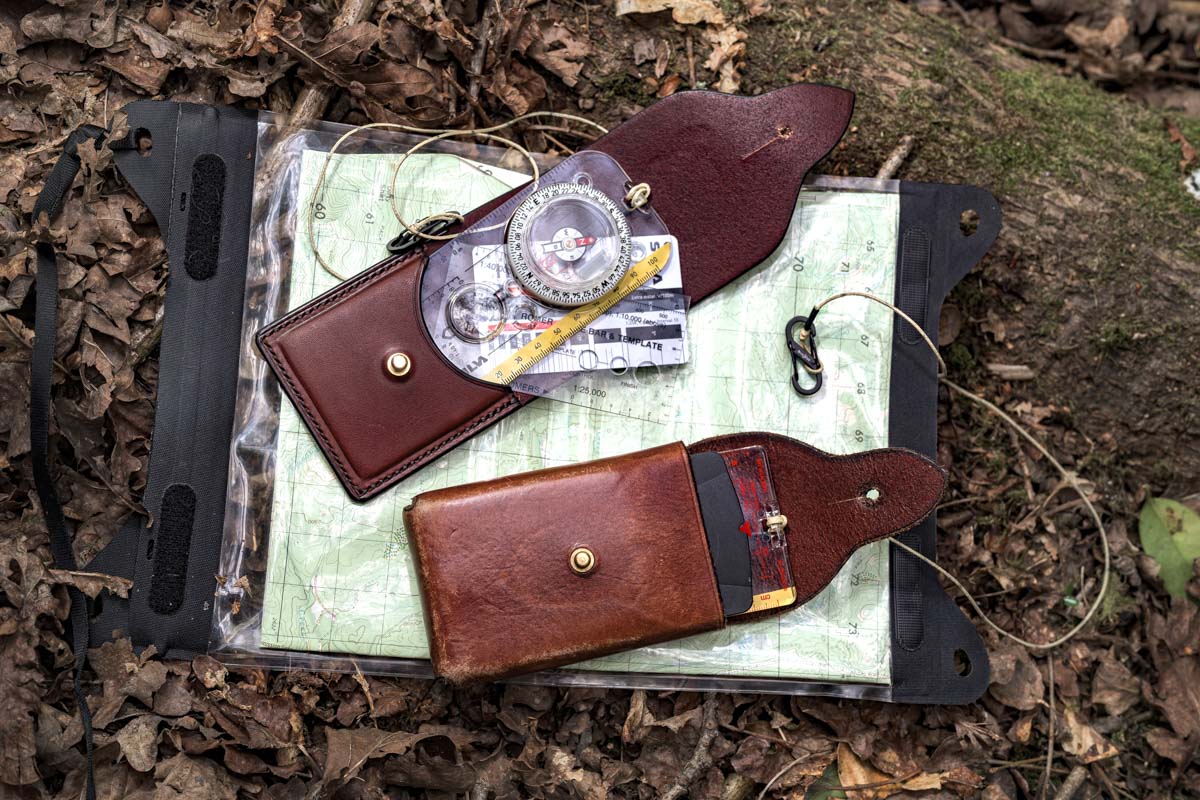
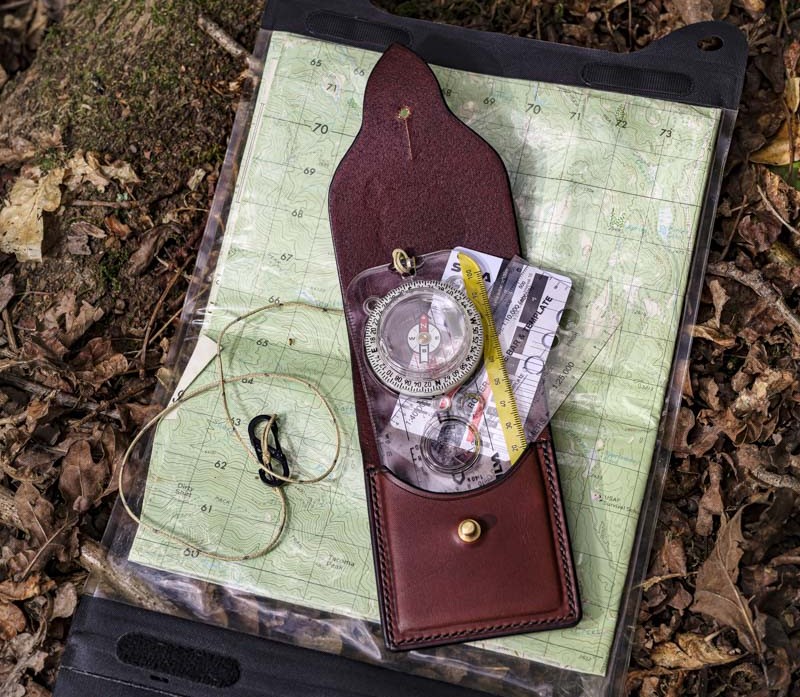
For open country, I often use a Silva 55-6400/360 baseplate compass with a prismatic system for accurate bearings. Either one marked in degrees or one in mils, if I’m working with the military. That level of accuracy becomes important depending on the environment.
More recently, I’ve started using our compass wallet for that compass too. I’d kept it in a Cordura pouch for years, but leather does the job much better. It protects it properly, and it also gives you somewhere to keep other navigation tools, like a romer, so everything is together when you need it.
Good kit isn’t just about individual items, it’s about how everything works together, and how easily you can access it when it matters.
Lisa: With GPS and smartphones, why is a compass still so important?
Ray: We’ve got incredible technology now, phones with maps of entire continents, GPS devices that are highly accurate. They’re brilliant tools, and I of course use them.
But anything electronic can fail. Batteries run down, devices get damaged, and in certain situations, particularly in conflict, signals can be interfered with or jammed.
A compass doesn’t have that problem. It responds only to the Earth’s magnetic field. There’s something very reassuring about that, it’s constant, dependable.
“A compass answers to nature alone.”
I still find it quite remarkable, watching a compass needle settle and align itself with something as fundamental as the Earth’s magnetic field. It’s a very simple thing, but it’s also quite profound.
Everyone should learn to navigate with a map and compass. They give you a proper understanding of the landscape, something you don’t get from a screen. When you’re looking at a map, you see how everything relates, the bigger picture. With electronic navigation, you can end up with quite a narrow view of where you are.
And if you already understand traditional navigation, you’ll get far more out of modern tools. You’ll understand what they’re doing, where they might go wrong, and how to check the information they’re giving you.
Lisa: What advice would you give someone just starting to learn map and compass navigation?
Ray: People tend to rely on obvious features, roads, paths, things that are easy to recognise. But the real skill is in reading contours.
You need to understand how a two-dimensional map represents a three-dimensional landscape. Once you start to see that, what’s steep, what’s gradual, where the ground rises and falls, you begin to understand the land in a much deeper way.
Those features also change the least over time. Paths move, vegetation changes, but the shape of the land remains. So, they’re the most reliable features you have.
If you build your navigation from that foundation, everything else becomes easier. You’re not just following a line on a map; you’re interpreting and visualising the landscape itself.
That’s when navigation becomes much more intuitive.
Lisa: That ties into something at the core of what we teach here at Woodlore, preparation. How much difference does it really make?
Ray: Absolutely, it makes a huge difference. Failing to prepare is preparing to fail.
Before you set out, you should always understand your geographical boundaries. Whether you’re in the desert, a forest, or a local park, you should know the features around you, roads, rivers, ridgelines.
That way, if you get disoriented or are in danger, you can head to a boundary that can be followed like a handrail back to something familiar or to a safe place.
Preparation isn’t about overthinking, it’s about giving yourself simple, reliable options.
Lisa: Coming back to the compass case, how important is longevity in its design?
Ray: Very. Leather is an extraordinary material. It’s organic, durable, and perfectly suited to the task.
There’s a tendency today to reach for highly technical materials that are often over-specified. But traditional materials, used properly, can last just as long, if not longer, and they can be repaired.
That’s something we’ve lost a bit: the idea of maintaining and passing things on. But when something is well made, I have found that people tend to value it differently.
Lisa: Of course, design and materials show their true worth once they’re put to the test.What about when conditions get rough, rain, rivers, the occasional capsize?
Ray: It’s never been a problem long term. Leather gets wet, it dries out, it’s very straightforward. Dry it slowly, as my old buddy Lars Fält used to teach.
“Where butter melts leather melts.”
You might need to care for it occasionally, but that’s part of owning good equipment. And that process of care is a good thing; it keeps you connected to your gear.
The only place I tend to avoid leather is in the rainforest, because in that environment, everything gets eaten eventually!
Lisa: Good to know, though slightly terrifying. I want to ask if it’s the flora or fauna doing the eating, but we would get sidetracked. So, tell me instead about caring for your compass case.
Ray: I should probably take better care of it than I do, give it a bit of dressing now and again. You’d be better off asking our leatherworker Becky how to look after it properly.
Which is exactly what I did.
Lisa: We get asked quite often how to look after leather properly. What’s the best way to care for the compass case or any of our leather items?
Becky: Becky: It’s actually very straightforward. Leather is a forgiving, durable material, if you treat it simply, it will look after you in return.
If it gets wet, that’s absolutely fine, just let it dry naturally at room temperature in a shaded airy space. Given a bit of time, it will settle back to normal without any fuss.
For day-to-day care, a quick wipe with a damp cloth will deal with most things. If it’s picked up a bit more dirt, a little saddle soap will clean it up nicely, just let it dry fully afterwards.
Every now and then, it benefits from a light feed. Most conditioners combine oils and waxes: the oils nourish the leather, while the waxes add a gentle level of protection. A small amount goes a long way. you’re looking for supple and well-kept, not heavy or overdone.
A soft buff afterwards will bring out a lovely natural finish.
And when it comes to storing it, just let it breathe. A natural fabric wrap and a dry, ventilated space will keep it in good condition for the long term.
It’s really about simple, occasional care, nothing complicated, just enough to keep it at its best.
Lisa: All of this brings us back to the bigger picture, how these tools fit into the way we navigate today. Where do simple tools like the compass fit into modern life?
Ray: I think they’re being forgotten, and that’s to our detriment.
The beauty of a compass is that it works regardless of power supply, satellite coverage, or interference. It’s always there, doing exactly what it should.
It also helps you verify other tools. I’ve seen GPS devices give incorrect readings simply because they weren’t calibrated properly.
I remember testing an early handheld GPS with a built-in gyro compass. It worked perfectly, until I took it into very cold conditions. At around -30°C, a component failed and the unit drained its own battery. It was a useful lesson: the last thing you want is to rely entirely on a device that can fail without warning.
“Technology is useful, but understanding is essential.”
If you understand navigation, you can recognise when something isn’t right. You don’t just accept what a device tells you, you question it.
One of the key principles in navigation is thinking ahead, making an estimate before you take a bearing, checking whether what you’re seeing makes sense. That habit alone can prevent a lot of mistakes.
“Good navigation is about thinking before you act.”
Good navigation isn’t about blindly following a device, it’s about constantly observing, estimating, and confirming where you are in relation to the land around you.
Lisa: How often do you get lost?
Ray: I don’t, really. I particularly enjoy difficult navigation; there’s a satisfaction in solving those problems. In fact, the more challenging the navigation, the more engaging it becomes.
That said, sometimes taking a wrong turn leads to something unexpected. On a canoe trip in Canada, I once went down the wrong channel. I realised straight away, but I didn’t mind, I was enjoying the journey.
At one point, I had to squeeze my canoe under a fallen tree. On top of it was a blood trail where a lynx had carried its prey across the river. I’d never have seen that otherwise. It reminded me of the old saying.
“If you haven’t been lost, you’ve never really been found.”
Lisa: Any final thoughts?
Ray: A compass is one of the most beautiful tools we have. I still love picking mine up and watching the needle settle, it’s a simple thing, but it never really loses its appeal.
And the case? It just does its job. It protects something important, quietly and reliably. You don’t really notice it, and that’s exactly how good equipment should be.
Over time, it becomes part of your outfit in a very natural way. It’s there when you need it, and you trust it to do what it’s supposed to do.
If you notice your equipment, there’s usually a problem.

 The Ray Mears & Woodlore Bushcraft Blog