
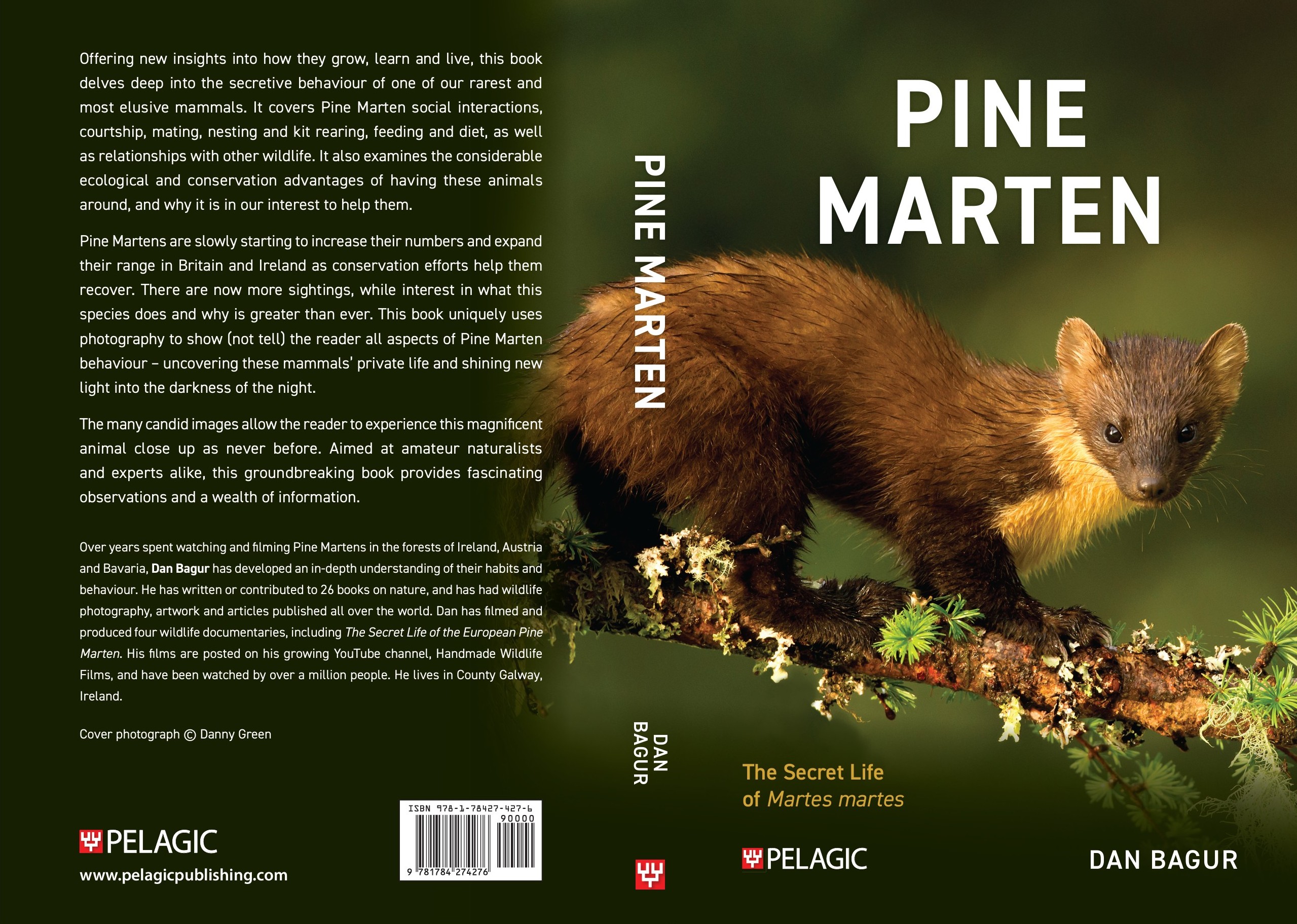
In his remarkable new book, The Pine Marten: The Secret Life of Martes martes, published by Pelagic Publishing, wildlife author Dan Bagur shares the story of a five-year field study dedicated to one of Britain and Ireland’s most elusive mammals.
We spoke to Dan about obsession, fieldcraft, conservation, and what pine martens can teach us about reconnecting with the wild.
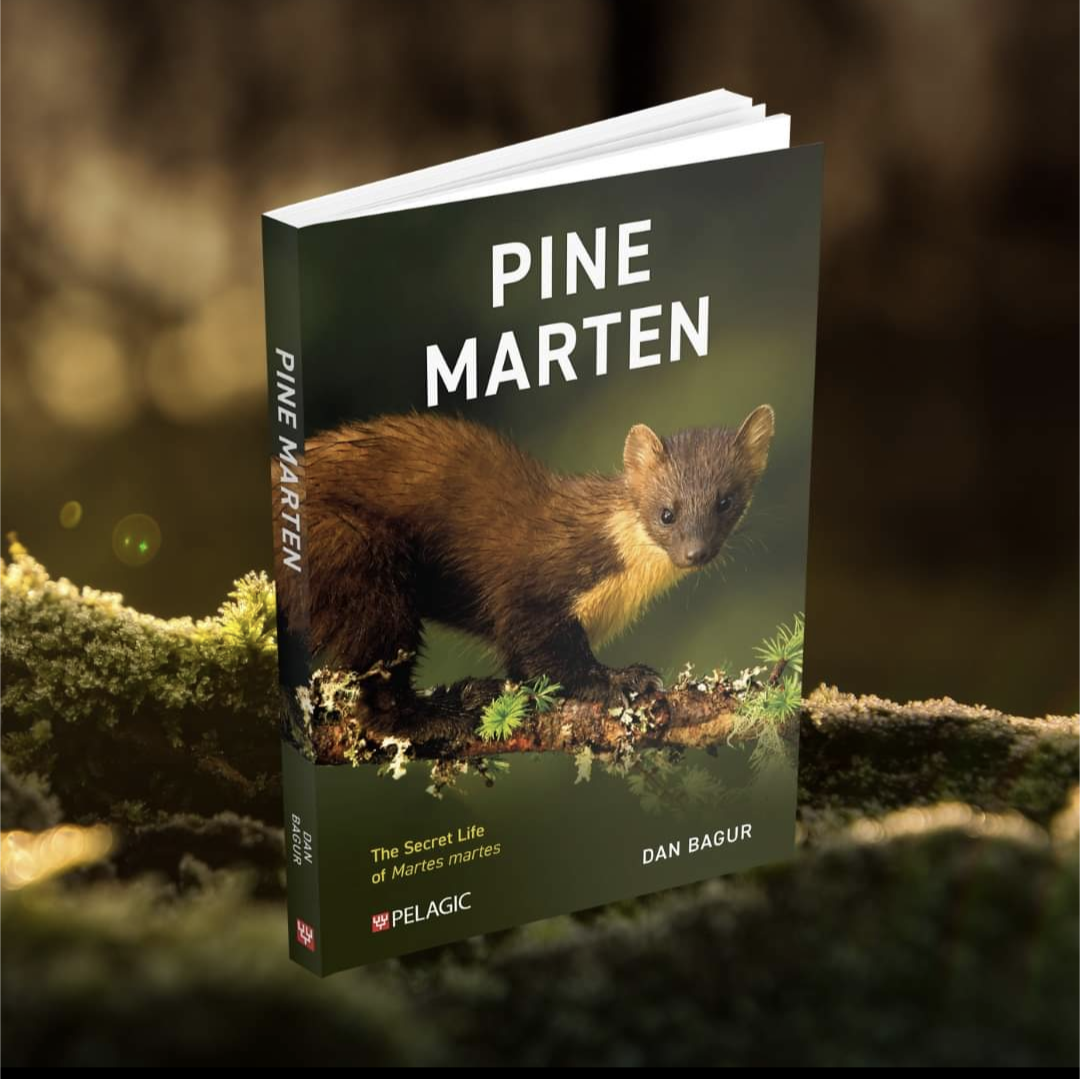
What inspired you to write The Pine Marten?
Dan explains that pine martens always symbolised wilderness for him, much like eagles do for Ray Mears in We Are Nature.
As a young man in Rutland, they felt impossibly remote. But after moving to Ireland in 2018, he found himself surrounded by mature woodland. When he discovered pine marten scat in the garden of a derelict cottage he was viewing, the decision was instant: this was home.
While restoring the cottage, he began rewilding the land around it, focusing on creating habitat for fauna rather than simply planting flora. Gradually, the forest responded. Jays, red squirrels, badgers, foxes, and pine martens, became regular visitors.
What began as curiosity became a five-year direct observation study. The more he watched, the more questions he had. The book is the result of that obsession.
What did the fieldwork involve?
“Patience,” Dan says. “And more patience.”
Pine Marten encounters are often fleeting, just seconds before they vanish into the canopy. Many days passed with no sightings at all. But slowly, encounter by encounter, a fuller picture emerged.
He describes magical moments along the way: a young leveret approaching within arm’s reach; the first sight of pine marten kits emerging from their den, already scrambling up trees.
Inspired by the immersive woodland experiences described in British Woodland: How to Explore the Secret World of our Forests, Dan learned to value not just the sightings, but the stillness between them, the changing light, the subtle shifts in birdsong, the quiet rhythm of the forest.
How did you approach photographing such an elusive animal?
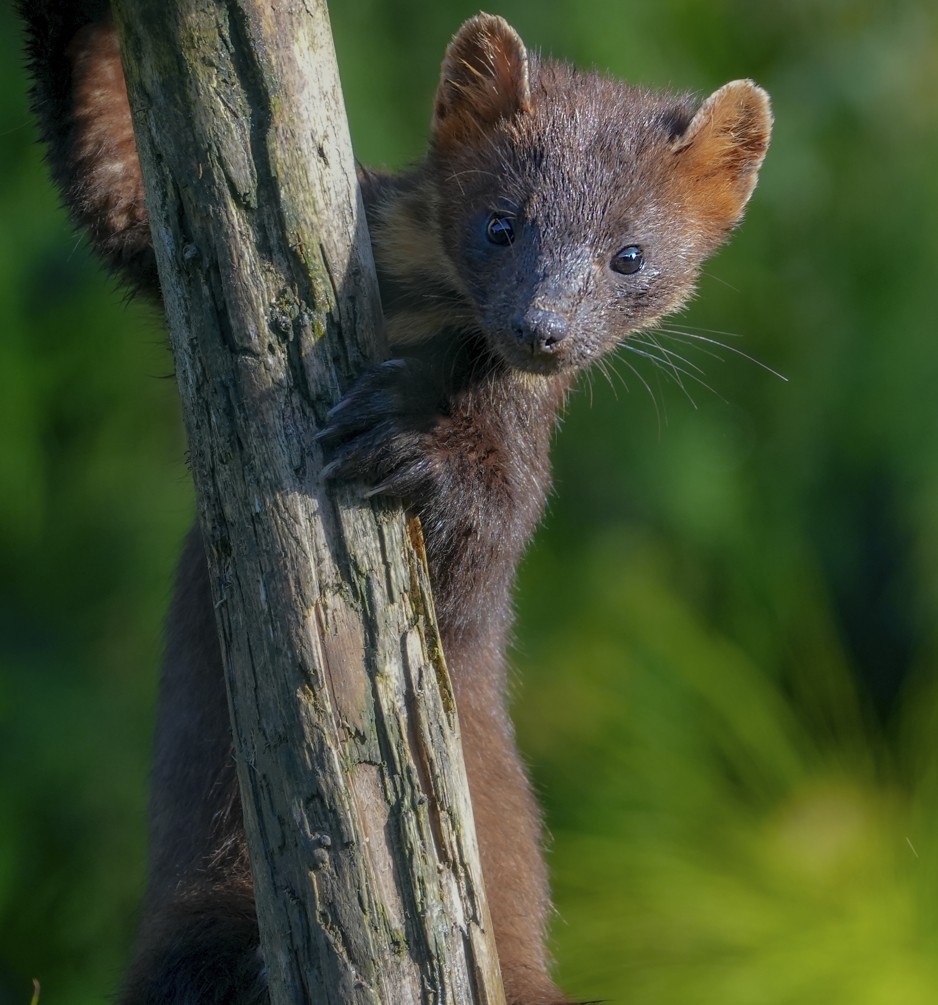
Over 10,000 photographs were taken during the project.
At first, Dan didn’t even know where to look. Tracks and signs that seemed invisible slowly became obvious. Fieldcraft, moving quietly, understanding territory, knowing where to wait, proved essential.
Rather than chasing perfect portrait shots, he became increasingly excited by grainy images that captured new or previously undocumented behaviour. For him, discovery mattered more than aesthetics.
Consistency, he says, is everything: “Turn up every day. At some point, your efforts are rewarded.”
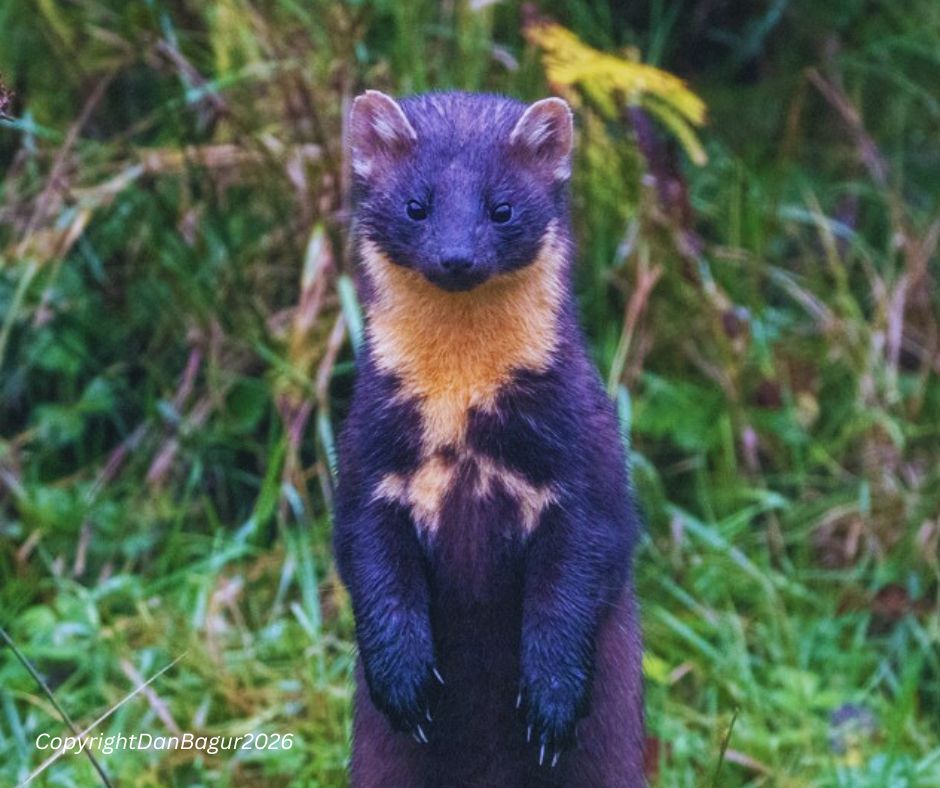
Ray Mears called the book ‘a labour of love’. What did that mean to you?
Receiving an endorsement from Ray Mears, someone he admired growing up, was a major milestone.
But the phrase “labour of love” rings true. Five years of early starts, biting insects, freezing temperatures, and solitary observation could only be sustained by genuine passion.
The book is also “timely.” Pine martens, once heavily persecuted, are slowly recovering in parts of the UK thanks to organisations such as the Vincent Wildlife Trust. Yet threats remain, habitat loss, road mortality, low genetic diversity, and the risk of renewed persecution.

Why do Pine Martens matter?
Dan puts it simply:
“Where there are lots of people, there are few pine martens. Where there are lots of pine martens, there are few people.”
“As indicators of healthy woodland ecosystems, pine martens represent something larger: functioning, wilder forests. They even play a role in supporting native red squirrel recovery.”
Their charisma helps people care. And caring is where conservation begins.
What field skills are most important when studying wildlife like this?
Dan highlights the value of reading sign. Drawing on insights similar to those in Tracking & the Art of Seeing: How to Read Animal Tracks and Signs by Paul Rezendes, he emphasises that pine marten scat alone can reveal territory, diet, seasonal changes, even genetic information.
Early starts help capture fresh tracks before they disappear. But perhaps most importantly: sit still.
Walking through woodland often pushes wildlife away before we notice it. Waiting quietly invites closer encounters.
What message would you give to those wanting to deepen their understanding of British wildlife?
“Pick one species,” Dan says. “And become obsessed.”
Read the science. Read the books. Then go into the woods and observe for yourself.
Direct observation, he believes, reconnects us not just to wildlife—but to ourselves. Echoing sentiments found in My Outdoor Life, he argues that time spent alone in wild places sharpens awareness and deepens understanding.
The more we understand one species, the more we understand how everything in nature is connected.
A Book for Woodlore Readers
For bushcrafters, outdoor enthusiasts and naturalists, The Pine Marten is both inspiration and practical example. It demonstrates the power of patience, consistency and deep observation.
It reminds us that there is still wildness in Britain and Ireland, if we are prepared to slow down enough to see it.
And perhaps most importantly, it shows that meaningful discoveries are still possible, not in distant jungles, but in our own forests.
Email: info@raymears.com Call us: 01580 819668

 The Ray Mears & Woodlore Bushcraft Blog
Sounds wonderful! In my part of the world (rural Western NY) the pine marten’s relative, the fisher, is reestablishing large populations. It’s a real treat to see one and watch them hunt through the woodland. Fresh snow is a great time to go looking.
LikeLiked by 1 person