
Beat the Heat: Best Outdoor Gear and Safety Tips For Adventures In Hot Weather
1 Reply


Hand-forged in Sweden, the Gränsfors Bruks American Felling Axe is built for powerful performance in forestry, bushcraft, and outdoor living.
Continue reading

We love Winter camping and the challenges that can bring, Spring, on the other hand, is an open invitation to all, a call to step outside and embrace nature at its most vibrant! In this blog article, Ray and the Woodlore team want to bridge the gap to summer camping and help you get outside and enjoy the great outdoors for there is an electricity and anticipation in the air that is truly exciting to be part of!
Continue reading

With short days and sometimes less-than-favourable weather, the winter season is often the time when many choose to stay indoors, hanging up their gear until spring returns and the world ventures outdoors once again.
Continue reading
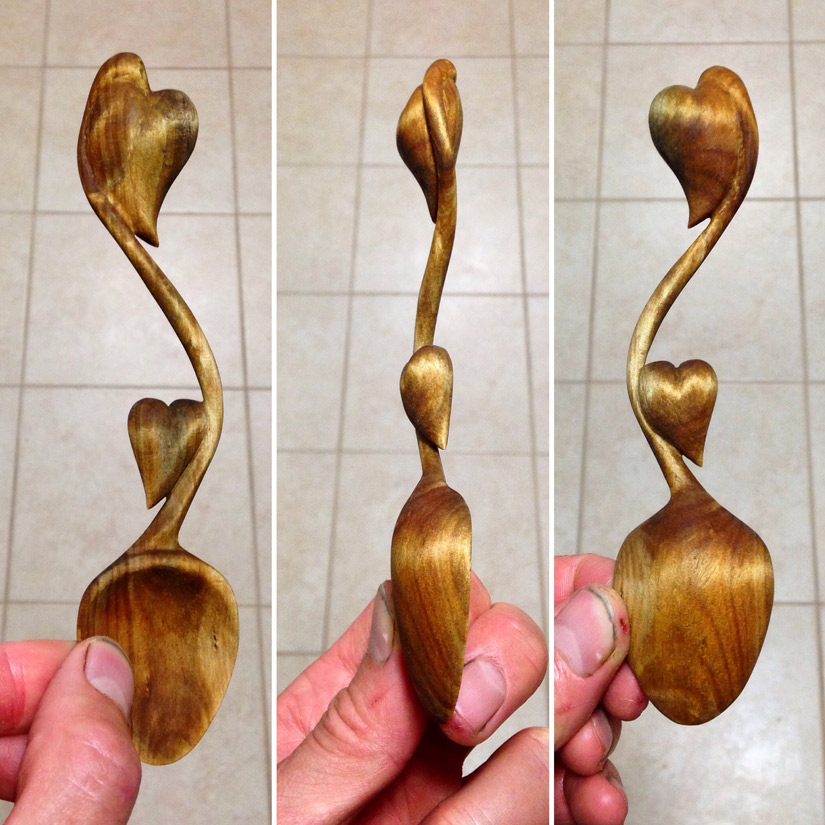
The following text and lovely accompanying photographs were kindly sent in by Woodlore customer Tom Scandian:
You need very few tools for spoon carving which are very cheap and great quality, all of mine have come from Woodlore and include a Mora Carving Knife, S Djarv Hantverk large Spoon Knife, Folding saw and a Mora Heavy Duty. You can carve basic spoons with just a normal pocket knife, however a good quality spoon knife and carving knife go a long way to improving quality and detail!


A folding saw is an essential item of equipment when travelling in woodland areas, but sometimes something a little larger can ease the workload and open up possibilities. Carrying a buck saw or pack saw is one way to address this, but if you want to travel a little lighter it is possible to carry just the blade and improvise a frame from the woodland; one of the many skills taught on the Woodlore Camp Craft course. The bending of the wood is usually facilitated by heating, but this is not always necessary as you will see. For this guide, we used a 24″ Bahco Bowsaw Blade.

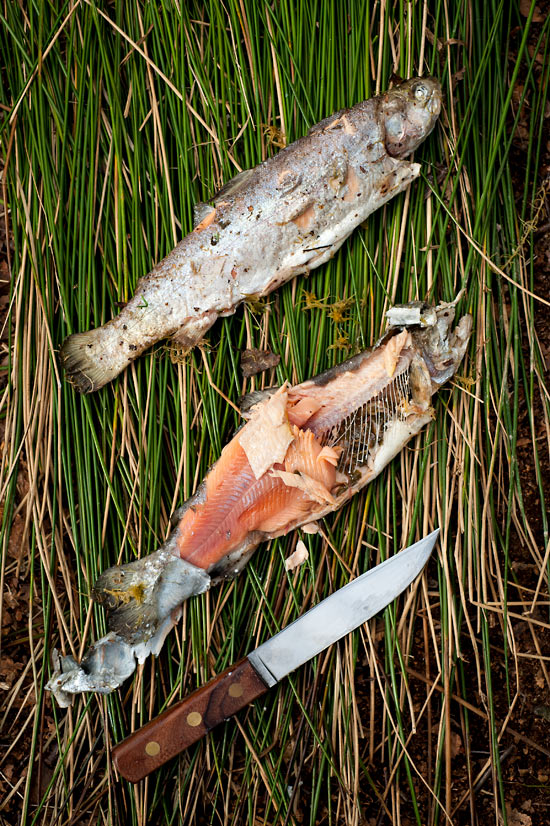
In this edition of our outdoor cooking guides we focus on the method of steaming your food between two layers of moss. While not often seen, this technique happens to be one of the simplest ways of cooking in the outdoors, particularly with fish. It requires very little in the way of utensils or equipment (which also means minimal washing up), and is very hygienic.
To us though, the greatest benefit of using this method is the way that it leaves you feeling truly immersed in the outdoors. The act of reeling in a fresh catch and cooking it just minutes later over the campfire, using little more than the materials nature provides us with, gives a profound feeling of self reliance and respect for nature that is hard to match.
This particular dish requires just two ingredients – trout and wood sorrel, the latter being a very pleasant stuffing when working with fish. In order to cook this meal, you must first prepare a hot fire with a good bed of embers, preferably of oak.
Ingredients:


At this time of year the hedges are blooming with elder, and the flowers are now at their prime. It is a wonderful sight, and for generations countryfolk have used the plant to make cordials, champagne and wine, amongst many other uses, and for many it is seen as the true taste of the season. In this article we demonstrate how to make one of the tastiest and easiest dishes of the summer.
The flowers, berries and finest stems next to the flowers are safe to eat; simply take care not to consume too many of the larger stems, as this can cause an upset stomach.
The dish shown here would serve three to four people.
Ingredients:


Bannock, as many of you will already know, is a traditional Scottish bread that has become a perennial favourite of the outdoorsman. Its popularity has much to do with its relative simplicity when it comes to the ingredients required and the method of preparation. When cooked correctly, the end result is a filling, warming bread that is packed with energy to sustain you on the trail.
There are numerous ways of cooking bannock, with each region commonly having its own take on the standard method. In Australia (where it is referred to as ‘damper’) it is sometimes cooked straight on the embers of the fire; in the far North it is more often cooked in a frying pan. In Northern America, the dish was quickly adopted by indigenous peoples after it was introduced by fur traders. In order to free up cooking equipment for other jobs, the Cree and other First Nations utilised a less common technique of cooking their bannock skewered on a stick, and this is the method we have followed here.
The dish shown in this article served three people.
Ingredients:

Last month we shared our guide on how to cook a Hunter’s Stew in the outdoors, in which we suspended a small Dutch oven over the campfire using a tripod made from natural materials. For those who haven’t made one before, here’s a quick guide on how to make your own cooking tripod.

The various ways of suspending a pot over the fire are almost endless, but the adjustable tripod hanger is one of the simplest and most effective options, particularly when you encounter hard or rocky ground. Not only is it a practical tool, it is also an elegant addition to any camp. Requiring only basic tools and a few simple skills, it is quick and easy to make. Continue reading

 The Ray Mears & Woodlore Bushcraft Blog