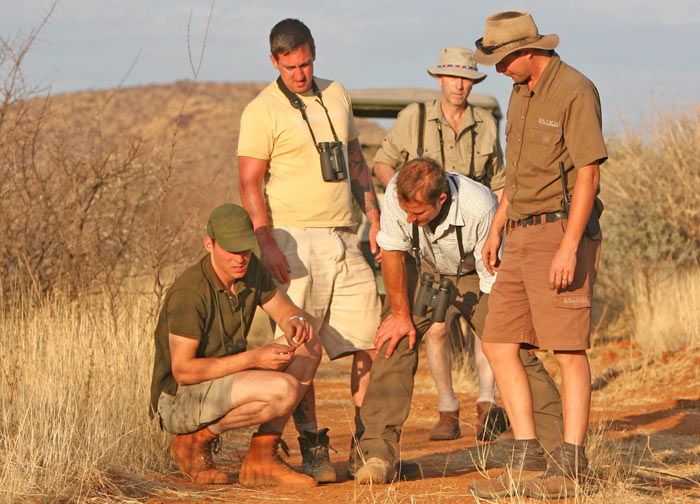
Last weekend at Woodlore there was a fantastic atmosphere and a tremendous enthusiasm for the coming year as our outdoor team assembled for the annual staff training meet. We were blessed with gorgeous weather more reminiscent of June than mid March, which was greatly welcomed by all!
Category Archives: The Woodlore Team
Fitness isn’t Just for Gym Bunnies
You’ve skied a full day, flattened out a platform, set up your camp and set off to find, fell, retrieve and process your firewood for the night. Sat in your warm tent drinking a brew, you look over your route for tomorrow, then tea and bed, waking when it’s your shift to stoke the stove.
Fitness enables mental alertness, the capability to make quick decisions, problem solving skills and the ability to cope with fatigue. Physical robustness isn’t just about being the fastest or strongest; it’s one of the keys to the backcountry. Being able to carry out demanding tasks with ease means you’re less likely to make a simple mistake which could have serious consequences for you and those in your charge. Continue reading
Ray Mears Celebrates his 50th Birthday
Today marks the 50th birthday of Woodlore’s founder, Ray Mears. In honour of this special occasion, the Woodlore team commissioned the work of a master hand engraver to produce a set of custom silver cufflinks, etched with the classic Woodlore logo.
On behalf of the entire Woodlore team, we would like to wish Ray a very happy birthday; here’s to many more years of adventures!
Time for Change: My Experience of the Fundamental Bushcraft Course
The following post was written by Woodlore’s Quartermaster and Aspirant Instructor Keith Whitehead:
I’m sometimes asked during the winter months if things at Woodlore are quiet. Nothing could be further from the truth. It’s true that our UK season has wound down following the end of the Journeyman Course, but there is still work to do and adventure to plan.
One of my first tasks as Quartermaster is to organise the course equipment so that it is ready for the next season. This, as you might imagine, takes some time and, sometimes, during the process of organising and sorting through the stores, I come across a lost gem that sparks the imagination. One such gem is an old catapult. When I first set eyes on it, there was a glimmer of a memory from years ago and I recognised it as being the same item pictured in The Survival Handbook, written by Raymond Mears in 1990. I received the book as a present soon after its publication and was immediately enthralled by it. This was to be one of the stepping-stones that led me to Woodlore and started my journey with the company. Continue reading
Navigation – The Key to the Wilderness
The following post was written by Woodlore Aspirant Instructor Rob Bashford:
The Art of Navigation
I have often heard Ray refer to the compass as the ‘key to the wilderness’. By this I believe he means it unlocks the full potential of the outdoors, enabling you to travel confidently in wild places. Navigation is undoubtedly one of those foundation skills, along with the likes of first aid, around which all other bushcraft skills should be built. The ability to navigate proficiently is an absolutely key skill if you plan to venture into the outdoors and its importance rises in direct proportion to the remoteness of the environment. It is very often the case that emergencies in the outdoors are the end result of an earlier navigational error.
The problem is that in today’s world of GPS and mapping software, now conveniently incorporated into smart phones, it is all too easy to think that the map and compass have become outdated. Nothing could be further from the truth. As in other areas of bushcraft, the best tools are those that are simple and robust, meaning they can be relied upon in tough environments. Those that utilise electronics and batteries do not generally fall into this category. That is not to say there is no place for this technology but it should never be the sole means of navigation. There is no substitute for the humble map and compass.
The ability to navigate with confidence is a wonderfully liberating skill, enabling you to venture further off the beaten track and really immerse yourself in wild places. The real beauty of this skill is that it is entirely transferrable to different environments. Yes, the maps may look a little different in foreign countries and there are some important variables to be aware of, but ultimately the skill of using a map and compass remains the same wherever you are in the world.
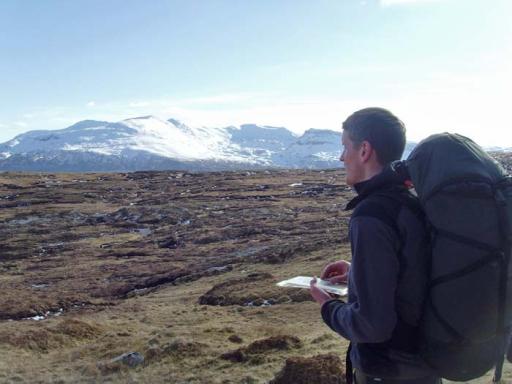
In its simplest form, navigation means knowing how far you have travelled from a known point and in what direction, a process known officially as ‘dead reckoning’. In reality there is a bit more to it than this and like many of the skills in bushcraft, observation is paramount. Learning to read the subtleties of the terrain allows you to venture into seemingly featureless landscapes, where there are no signs or paths to guide you. It also builds an inner confidence and that frees you to visit those less frequented places.
Although there is certainly scope for teaching yourself the basics of navigation, as when learning most new skills, a little instruction goes a long way. Woodlore has been running wilderness navigation courses for some years now and we have distilled Ray’s many years of wilderness navigation experience into a readily digestible format. These courses are unique, in that we teach you techniques you can use anywhere in the world, with a strong emphasis on woodland navigation. This environment mirrors the rigours of navigating in reduced visibility and is perfect preparation for the night navigation elements of the course. It is safe to say that when you can find your way confidently through dense forest at night, with only a map and compass to guide you, you can navigate just about anywhere.
– Rob Bashford
Tracking in Namibia with Ray Mears
The following post was written by Woodlore’s Fundamental Instructor and Head of Operations, Dan Hume.
Following the success and popularity of our 2012 expedition, in October 2014 we will be returning to the African bush to run our Tracking in Namibia Expedition with Ray Mears once more.
We will base ourselves in the Erindi Private Game Reserve; a beautiful and unique area ten times the size of Manhattan, located in central Namibia. The reserve boasts a staggering and truly exceptional variety of African species. As just one example to give you some idea, we frequently saw black and white rhino in the same morning which, as you will probably know, is almost unheard of throughout the rest of Africa.
Please have a look at the photographs below, taken during our last trip:
This is the focus of our time spent in Africa; out on the ground, tracking in the bush. The students in the picture above have just picked up the trail of an Aardwolf that passed by the night before.
Meddling with Medlars
The following post was written by Woodlore Aspirant Instructor Sarah Day:
This year has been a good one for many fruits (and fungi) – bumper crops of blackberries, apples and wild plums have been gathered in profusion by all who keep a keen eye on the hedgerows. I have recently tried parasol mushrooms (pictured below). Again, it seems to have been a bumper year for these, and I’ve cooked them up with wild sweet chestnuts and rice. Rice cooked with a little prepared acorn meal is another wild food recipe I can heartily recommend.
But this year has brought me a new opportunity: the opportunity to try possibly one of the un-loveliest fruits found growing wild in the UK – the humble medlar (pictured above). The fruit of the medlar tree (Mespilus germanica) is a peculiar thing, looking something like a huge brown ‘rosa rugosa’ rosehip, or a very deformed and rotten apple. They bear the distinction of being one of few fruits that must be bletted, i.e. hit by a frost so that they are really on their way to being rotten before they can be counted as ‘ripe’ (or stored for long enough so that bletting takes place naturally). Shakespeare and various other writers clearly didn’t think much of them, the ‘rotten before they’re ripe’ quality put in an appearance in several plays as a metaphor for moral rottenness. Continue reading
Woodlore Review – Swazi Nahanni Shirt
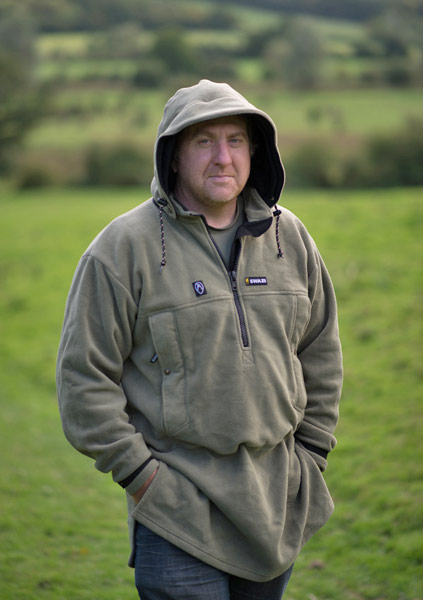
Here at Woodlore HQ, we’ve asked the members of our full-time team to pick their favourite courses and kit from our range, to find out just what it is that makes them so good. Team member Keith Whitehead picked his Swazi Nahanni Shirt:
I’m going to admit that I was a bit sceptical about the Nahanni Shirt when I first saw it. For a long time, I have been a huge fan of wool, especially for working in the conditions that we do for a large part of the year. My concern was that fleece would not be able to match my traditional choice in terms of hard wear or general practicality. I’m glad to say that I was wrong. Continue reading
End of Season Event 2013
In celebration of a very successful and exciting 30th Anniversary course season at Woodlore we invited the field team to join the office staff for a venison feast at one of our beautiful course sites in East Sussex.
The event took place on Saturday and we were overwhelmed to see so many of the team and their families who had made long journeys to join us in the celebration.

Collecting firewood and starting the fire to heat the rocks
A Reflection of the Season
After an exciting 30th Anniversary course season, Woodlore’s Head of Operations Dan Hume reflects on the year that has passed;
As the days start to become noticeably short and the pavements fade from grey to their rusty splendour, so too is our 30th anniversary year drawing to a close. This year’s course season has been jam packed with excitement, adventure and growth. The arrival of the first few weeks in February set the stage for our Arctic courses in Lapland, marking the beginning of a very special year. We continued through the early part of the year with our seventieth anniversary Heroes of Telemark expedition and our Boreal adventure, where we travelled 250km through the arctic forest on snow mobiles. Mid season, we ran a selection of British Bushcraft courses, from tracking to flint knapping and of course July was a very special month as we spent six days building a Birch bark canoe in the Algonquin way.
Birch Bark Canoe Building with Ray Mears and Pinock Smith – Day 5