In January we invited you all to take part in an interview with one of Woodlore’s Fundamental Instructors, Keith Whitehead. Many of you got involved and kindly sent us your questions, which we then whittled down to the best 10 entries. During a break from preparing for this year’s course season, Keith sat down with us for a chat and gave us his answers:
Category Archives: The Woodlore Team
Essential Skills for the Season Ahead
The following post was written by Woodlore Fundamental Instructor and Quartermaster, Keith Whitehead:
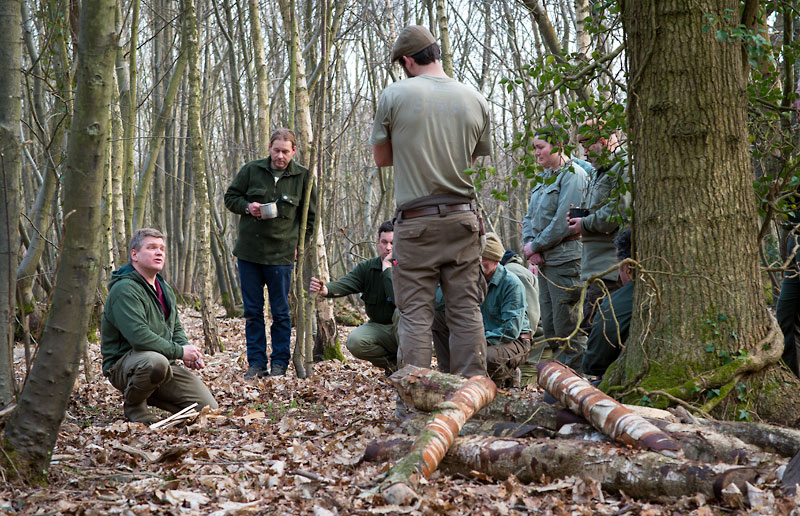
Last week saw the members of Woodlore’s field staff gathering in East Sussex for their annual training week. After a winter apart, this was an opportunity to meet once again, share stories, reaffirm friendships and get down to the serious business of preparation for the coming year. Every member of the team is expected to demonstrate their ongoing commitment to the subject that inspires us all and we were not left disappointed by the level of professionalism, leadership and skill that is the mark of our team.
Your Chance to Interview Woodlore Instructor Keith Whitehead
Some of you dedicated Woodlore blog fans may remember an interview that took place with Dan Hume back in August 2011, that comprised of questions asked by you. This year we are offering you the chance to put questions to our recently appointed Instructor Keith Whitehead. Keith has very kindly offered himself up as an interviewee, and will be answering a selection of your questions on topics chosen by you.
Prepare for Life
In the heart of winter, it can seem that the long, dark nights are closing in around us. But the forest, seemingly asleep, is already making preparations for the most spectacular of its annual displays. The days are already starting to draw out again as we are blessed with crisp mornings, and soon we will feel the excitement of change in the air. Look closely and you will see that buds of many trees are already formed, holding close their furled treasure; spring is waiting.

The magic of the British woodlands in spring is the wonder of transformation and new life. The leaner times of winter are washed away in a flood of colour, scent and sound. Once again we can rest in coppices bathed in the deep perfume of ramsons; walk beneath the cathedral bowers of the beech, fresh in the succulence of their new leaves; drift slowly to sleep, lulled by the heady perfume of bluebells, and wake to the serenade of birdsong. These are the experiences that form our year and bring renewed vigour to our love of the forest. There is an irrepressible thrill, a deep connection with the life of these very special places, which wakes the soul and sets our pace into the coming year.
As the sun’s weak rays start to muster their strength and bring warmth to our forest home, the plants that surround us respond with generosity. The sap will rise in the birch, giving us a short-lived opportunity to enjoy this invigorating draft. The willow will loosen its bark, allowing us to harvest the fibres needed for cordage at this time of year, and many other plants will provide their fresh, young leaves, ready for salads: a welcome repast which speaks of the freshness of the season.
Postcards from Namibia
Having returned from an extremely successful expedition in Namibia this year, we wanted to share with you a small taster of our experiences:
Winter Crafts
The following post was written by Woodlore Senior Assistant, Ross Burt:
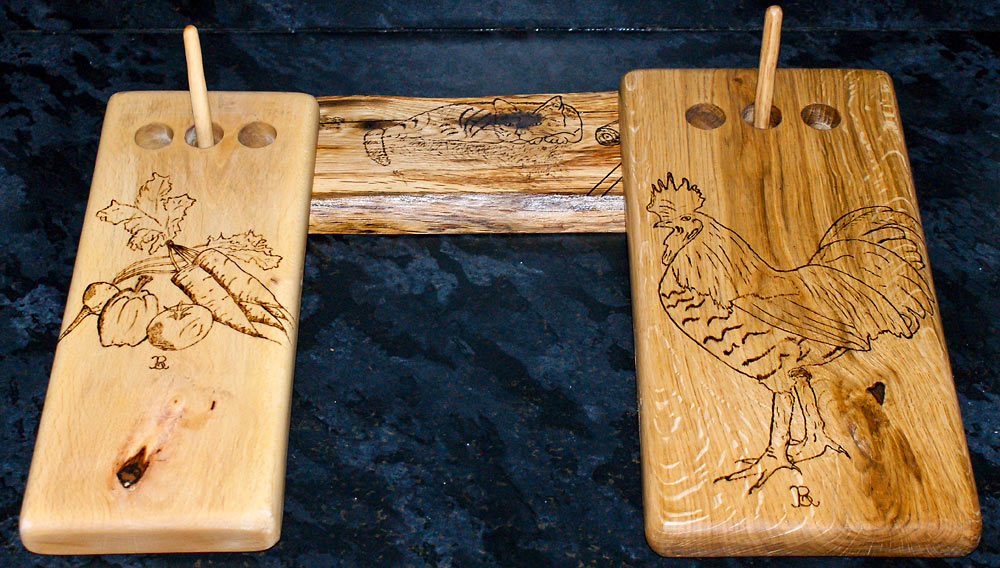
It’s that time of year when work goes quiet. Does that mean that it’s time to rest? NO! It means that I can get out into the woods and practice my skills, as well as produce items to sell or, in this case, give as a Christmas present! So, not only am I out practising and gaining more knowledge, I am also saving money and giving someone a much-needed gift.
I have just finished two chopping boards and a hanger for them; there is one from beech (this will be used for vegetables) and one from oak (for meat). There’s a give-away on the boards that suggests what each one should be used for! The hanger is made of oak and I decided to make the pegs from the same materials as each board.
October Delights – The Best Month for Foraging
The following post was written by Woodlore Senior Assistant, Mark Booton:
If you were to ask me what my favourite month is, I’d answer October without hesitation. The reason for this could be one of a number of things: It was the month I met my wife – we always go away for an October half term break – and I also look forward to the Woodlore end of season staff barbecue. These, though, aren’t the real reasons. I love October for one above all others – foraging.
I simply love to forage for wild fungi, and October never lets you down. September can be amazing, but it is a fickle month on the foraging calendar. It blows hot and cold. A late autumn and September can produce little. November can be good, but the enjoyment is always slightly tarnished because all too soon it will be over. October is the month.
Wood Mouse Spotting
During the UK course season, our team of instructors often find themselves gaining a unique level of intimacy with their surroundings at our various course sites. A number of our team are also keen photographers, and occasionally this blend of interests pays off in spectacular ways:
Can You Match the Deer Species?
The following post was written by Woodlore Senior Assistant Ross Burt:
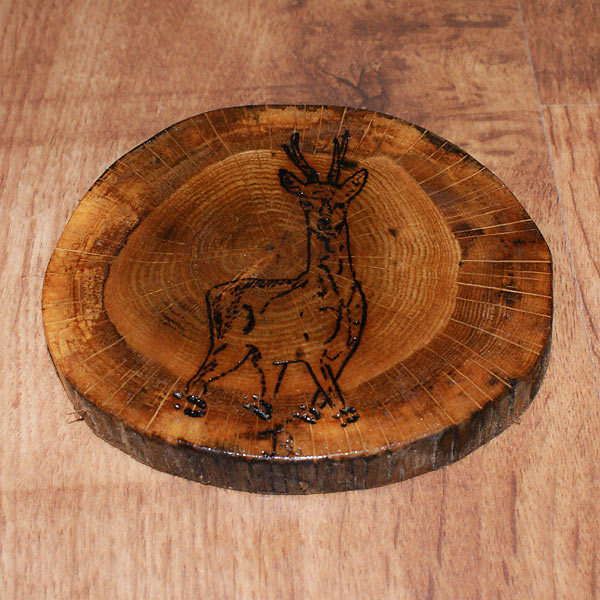
During the year and especially the winter months I produce my artwork to sell; I call this my ‘Bush Art’. During a Fundamental Bushcraft course on which Tom and I were working, a large beech tree fell and landed on a yew tree. One of the limbs that was smashed off was used by us to produce some coasters.
Some time later, I was sitting in a wood and it suddenly occurred to me that coasters usually come in a pack of six, now we have six species of deer in the UK! I popped out and used some beautiful oak for the ones shown below.
The Joy of Carving
The following post was written by Senior Assistant Mark Booton:
I am, if I’m being entirely honest, not a natural when it comes to carving. It is one of those Bushcraft skills which I need to work on. The fact that I find it challenging strengthens rather than diminishes my will to improve, and also heightens the enjoyment and satisfaction I feel when I carve something that I can be proud of.
I put down my knife and finish sanding my second Kuksa, a traditional wooden cup crafted by the Sami people of northern Scandinavia (my first attempt didn’t quite turn out as planned – my wife now very kindly refers to it as the ‘olive dish’!). I can remember the pride with which I took home my first carved spoon after attending the Fundamental Bushcraft course back in 2010. The fact that the spoon was not very good (misshapen and not symmetrical!) didn’t matter. I had toiled over it, sweated and bled (a little!), and eventually after several hours of sawing, carving and last-minute sanding produced something that, for all intents and purposes, resembled an eating implement… okay then, a spoon!