Category Archives: The Woodlore Team

Who Needs an Alarm Clock when You Have Geese

The following post was kindly written by Woodlore Senior Course Assistant Wayne Egerton:

Woodlore Team Member Wayne Egerton

Woodlore Team Member Wayne Egerton

“I’m having a girlie night in tonight with some friends.” Barely had my wife finished uttering these words and my rucksack was being stuffed and hoisted onto my shoulder. I knew just the spot… a seaside location about an hour’s walk away, and usually deserted.

The weather was clear, cold (2-3 degrees) and not a breath of wind. The joy of walking on one’s own is you see and hear more; wildlife not scared away by the idle banter of a pair. A woodpecker, wren, robin and not to mention a surprised fox, and that was only on the way there.

Tarp up and fire going, just big enough to keep warm and have a brew. As light faded, the tide retreated and it was just the oyster catchers, the curlew and the chill. I’m sure a fox visited in the night, but my hat was still on my head when I woke.

Home for the night

Home for the night

Continue reading

Taking Time to Look Closer

The following post was written by Woodlore’s Aspirant Instructor and Quartermaster, Keith Whitehead:

Woodlore Aspirant Instructor Keith Whitehead

Woodlore Team Member Keith Whitehead

During our many months spent in the field, we have the chance to see much wonderful wildlife and most of it is a joy to behold. There are some exceptions to this rule however, and racing its way to the top of most people’s lists of unwelcome visitors is the humble slug.

At this point you may be expecting me to extol the edible virtues of this creature in order to curry favour for the unpopular pest, but in truth they are best avoided; if you want a meal, put them on a hook and use them as bait. There is more to the average slug than meets the eye though and a recent encounter prompted me to investigate a little further.

Continue reading

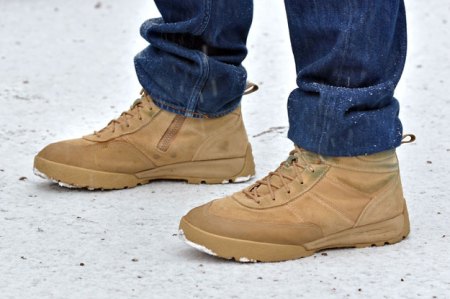
Woodlore Review – Le Chameau Chasseurnord Wellington Boots

Here at Woodlore HQ, we asked the members of our full-time team to pick their favourite courses and kit from our range, to find out just what it is that makes them so good.

Here at Woodlore HQ, we asked the members of our full-time team to pick their favourite courses and kit from our range, to find out just what it is that makes them so good.

Team member Diana Taylor picked her Le Chameau Chasseurnord Wellington Boots:

Diana Taylor and her Le Chameau Chasseurnord Wellington Boots

Di putting her Le Chameau boots and Bergans Down Light Jacket to the test at the stables with Hugo

Continue reading

Flint Knapping and the Amesbury Archer

Woodlore’s fundamental instructor Dan Hume shares his thoughts of Woodlore’s latest Flint Knapping courses:

Woodlore recently ran two flint knapping courses in the beautiful Sussex countryside. Guided through the skills by expert Will Lord, the weekend was based on the fascinating ‘Amesbury Archer‘, and during the course we replicated some of the tools and other items found surrounding his burial site.

Prehistoric tools of the trade

Prehistoric tools of the trade

Continue reading

First Aid Training With Woodlore

The following article was written by Aspirant Instructor and regular blogger Sarah Day:

Woodlore Aspirant Instructor Sarah Day

Sarah Day

This season I’ve been working quite a variety of courses and I’ve been struck by how different they are in terms of overall feel. The Fundamental Bushcraft courses are very fast-paced, with lots of skills and lectures being crammed into the week. The Campcraft course meanwhile is slightly slower-paced, to allow for adjustments to using a heavier more powerful tool like the axe. The Tracking Course is much slower, but no less intense; I would say that it has a more academic feel – not that you spend the week studying books, but because you are encouraged to study the minutiae of the woods, to really slow down and try and take it all in.

But whatever the prevailing atmosphere on even the most intense of courses, the aim is rarely to cause stress or fear; to test you certainly, and make you push yourself, but not to actually be stressful. The WEM courses are slightly different.

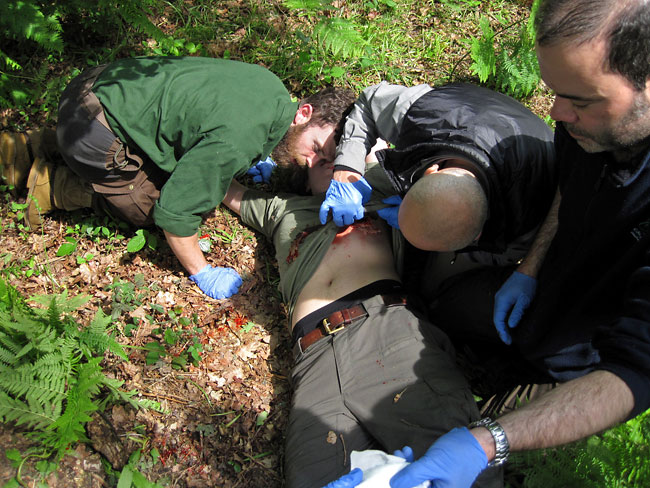
We put a hell of a lot of time (usually in the evenings, that’s when you might catch us whispering and cackling in a conspiratorial way), effort and material resources (the makeup box is awesome) into turning first aid from an academic exercise to a practical one; because that’s where a lot of first aid training fails – it doesn’t prepare you for actually doing it for real.

A typically realistic first-aid scenario from the WEM3 Course

A typically realistic first-aid scenario from the WEM3 Course

Continue reading

Canoe Training in the Ardeche Gorge

The following post was written by Woodlore’s Head of Operations, Dan Hume:

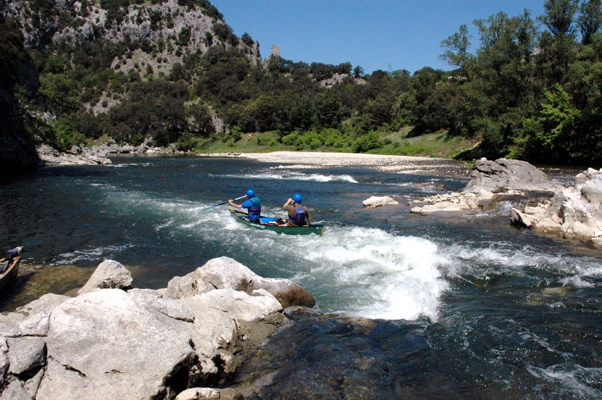
I recently travelled to the beautiful Ardeche gorge in Southern France and spent three days paddling on the crystal clear water with the aim of improving my open canoeing skills. I hadn’t received much canoe training prior to this trip, so I was very keen to get out on the water and learn.

The Ardeche gorge is absolutely stunning and as you paddle along it’s as though you could be on the other side of the world. The sheer limestone walls tower a thousand feet above your head on both sides of the river as it twists and meanders for thirty kilometres.

Dozens of small cave entrances are visible high up in the rock, many of them never visited and some of them containing ancient evidence of hunter-gatherers. There is one particular cave in the gorge, the cave of Chauvet-pont-d’arc, which contains 31,000 year-old rock art.

Students tackling the rapids on Woodlore's Canoeing in the Ardeche course

Students tackling the rapids on Woodlore’s Canoeing in the Ardeche course

Continue reading

No Smoke Without Fire!

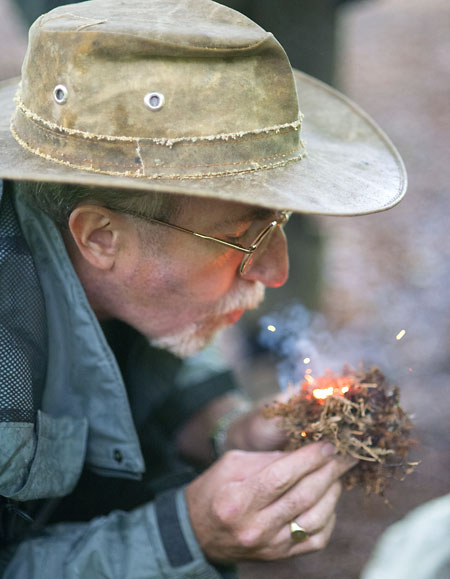
2012 has seen a whole host of new courses being added to the Woodlore roster, covering such skills as navigation, flint knapping and tracking. Arguably though, the most important skill to have in Bushcraft is the ability to create fire and, as we all know, there is more than one way to do it. Woodlore’s first ever Fire Lighting Techniques course took place last week to teach exactly that, with a cracking team of Dan, Keith and Steve at the helm.

Fire Lighting Techniques - 2012

Fire Lighting Techniques – 2012

Continue reading

Wilderness Emergency Medic – Our most gruesome course yet?

For those of you who are unaware, Woodlore has now been running a series of First Aid courses for over four years. Nowadays, a quick search online will reveal dozens, if not hundreds, of first aid training providers. But what makes a Woodlore First Aid course so special is that we gear them specifically for those of you who spend time in the outdoors. What’s more, each course revolves around highly realistic scenarios, aimed to really put your learning to the test.

Students rush to the aid of a gunshot wound victim on the WEM2

Students rush to the aid of a gunshot wound victim on the WEM2

So if you work in the outdoors, go camping alone or with friends, or are planning a more serious expedition, then the Wilderness Emergency Medic (WEM) range of courses that Woodlore run will provide you with first aid training that could prove vital in the field.

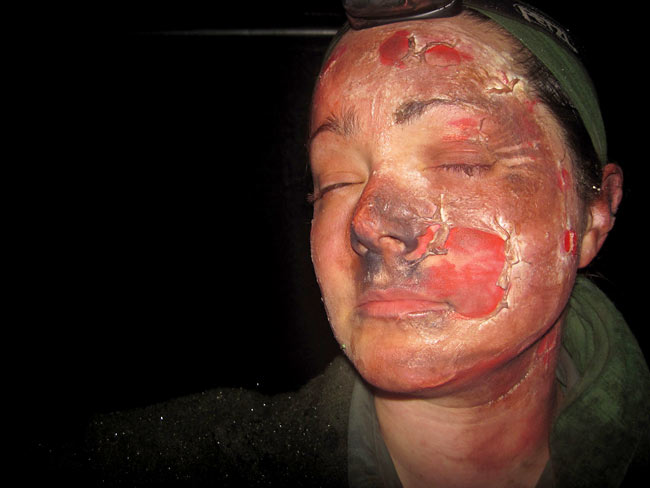
This year’s Level 2 course took place at the end of June and, with the help of Woodlore’s ever-inventive team, is now firmly in the running as one of our most gruesome courses yet! The aim of this method of teaching is to prepare our students for the worst; understanding first aid is one thing, but being able to apply that knowledge at times of high pressure is essential. A word of warning though – stop here if you’re squeamish…

Aspirant Instructor Sarah Day plays her part in a burns scenario

Aspirant Instructor Sarah Day plays her part in a burns scenario

Continue reading

Postcards from Norway

Steven Bullen, a member of Woodlore’s full-time office team, paid a short visit to Norway recently as part of a trip organised by the good folk at Bergans. Spending three nights in the Aust-Agder region of southern Norway, Steven joined a whole host of Bergans affiliates from all across Europe in making the most of the Norwegian wilderness. The group spent their time fishing, canoeing, hiking and camping, all the while putting their Bergans clothing and equipment to the test. In between paddling and hitting the trails, Steven had his camera on hand to capture the experience:

Having never visited Norway before, the first thing that struck me was just how sparsely populated the landscape is. Having left England behind with its crowded motorways and tightly-packed terraced houses, the sight I was greeted with as I stepped off the plane was a very different story; the wilderness clearly dominated the landscape here, with homes and offices seemingly dropped in amongst the trees here and there – a complete opposite to back home, where any green space seems to be surrounded by buildings.

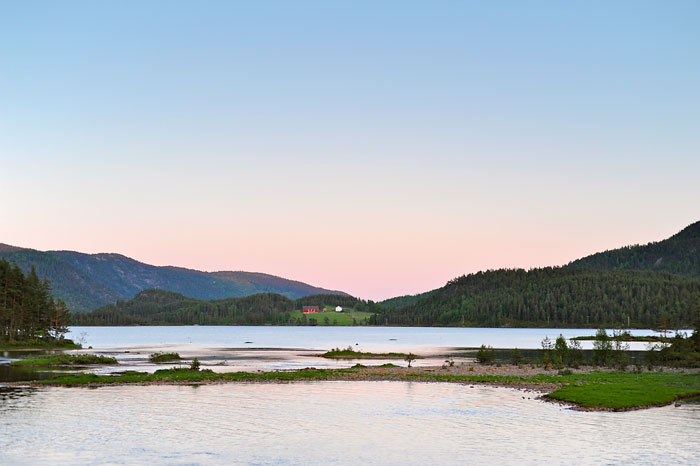
A typically tranquil view of the Norwegian countryside

A typically tranquil view of the Norwegian countryside

Continue reading

Wildlife Encounters (Why I love tarps)

No stranger to spending her nights outdoors, Woodlore Aspirant Instructor and regular blogger Sarah Day shares her love of camping out under a tarp:

Woodlore Aspirant Instructor Sarah Day

Sarah Day

Sleeping under a tarp is a daunting experience to the uninitiated – we are so used to having four walls and a floor (even when camping!) that going without seems ridiculous. However, most of the Woodlore Field Team camp out under tarps/ hootchies for at least some of the season, and they do bring several benefits.

I often find it difficult to sleep in a tent now; they can seem a bit airless after a tarp and, although on cold mornings the prospect of leaving a toasty warm sleeping bag is uninviting, once I’m up the cold is generally invigorating. I love lying in my sleeping bag, warm and comfortable breathing the sweet smelling air you only get after a night of gentle rain.

Tarps also force you to be organised with your kit. I always bring too much stuff with me – I’m often out for weeks at a time, but much of it is half-finished projects, books and examples of things for lectures. Being under a tarp makes it essential not only to be organised but to form out some sort of routine. At the end of a day I always put my kit in the same places, my fire flash and certain things from my pockets go into my hiking boots which have the insoles pulled out so they can air. My clothes are folded and put back in my rucksack and my head torch is looped round the drying line strung under the tarp. My Swannie is folded into a pillow with a shirt wrapped around it like a pillow case and my rucksack is propped up against a stick, purposely driven into the ground with my Swazi draped over it as a rain cover (especially if it’s still damp from a day of April showers). Because I follow the same pattern every evening, I know that my kit will be fine, whatever the weather. So, when I’m woken up in the middle of the night to the first pitter-patterings of a rain shower, I can lie there warm and smug, allowing the rain to lull me back to sleep.

A squirrel pup found at the course site

A squirrel pup found at the course site

Continue reading