Tag Archives: bushcraft

How to Sharpen an Axe at Camp

Keeping your knives and axes sharp is important for several reasons. Not only does a sharp tool make carving one of the greatest joys of bushcraft, it is also safer. When working with a blunt knife or axe you have to exert more pressure; this increases the chance of a slip and means that any ensuing cut will be more severe. As such, the ability to sharpen your tools to a razor’s edge is an essential skill. This classic clip from the Bushcraft Survival days shows Ray’s preferred method for sharpening his axe whilst at camp:

Continue reading

How to Cook Outdoors: Hunter’s Stew

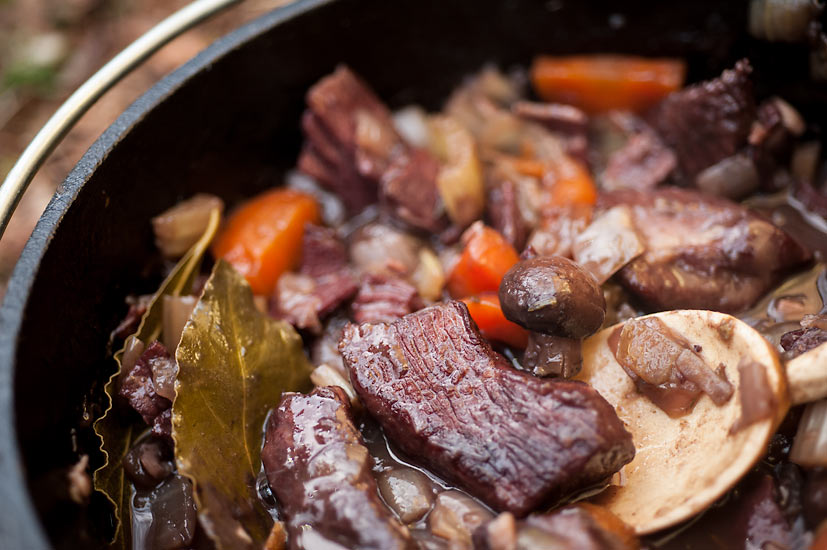
How to Cook Outdoors: Venison Stew

When we hunt for our own food, we can rest assured that the animal has led a free and natural life, that has come to an instant and humane end. Deer have been hunted in the woodlands of Britain for thousands of years and, as such, their meat forms a very natural part of our diets.

Venison is one of the leanest and healthiest of red meats, and a casserole provides a great way of cooking it outdoors. The Hunter’s Stew is a hearty, warming meal that is perfect for the cold evenings of winter and early spring. The dish shown here was cooked in a small Dutch Oven suspended over the fire, and served two people.

Ingredients:

  • 2 x small venison steaks
  • 1 x handful of flour
  • 1 x knob of butter
  • 1 x large onion
  • 2 x cloves of garlic
  • 6 x rashers of bacon
  • 1 x handful of mushrooms
  • 2 x sticks of celery
  • 2 x carrots
  • 1/2 bulb of fennel
  • 1/2 bottle of Merlot
  • 2 x bay leaves
  • 1 x sprig of thyme
  • 1 x tablespoon of honey

Continue reading

How to Sharpen a Knife at Camp

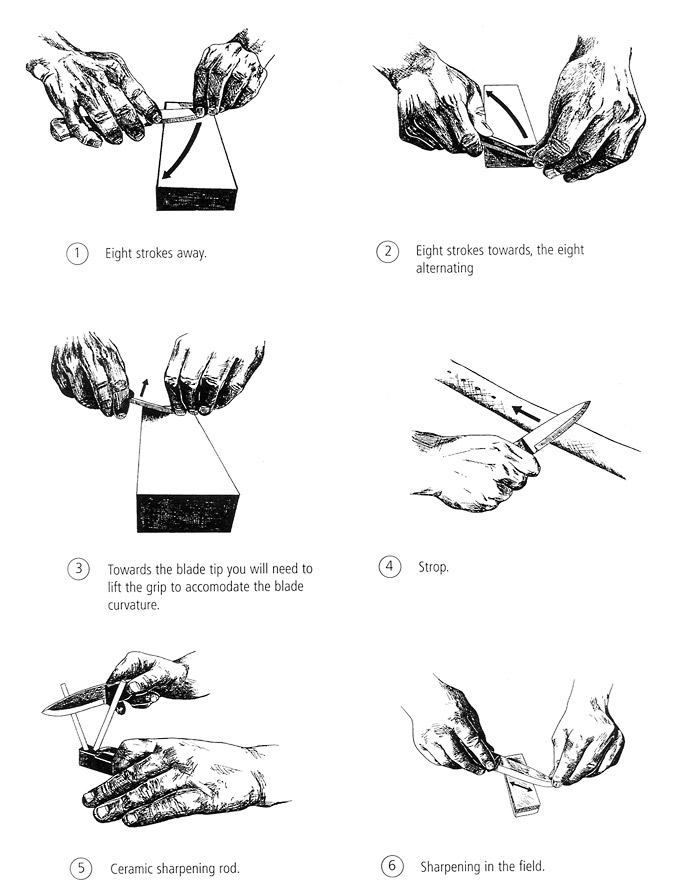
Keeping your tools sharp is important for several reasons. Not only does a sharp tool make carving one of the greatest joys of bushcraft, it is also safer. When working with a blunt tool you have to exert more pressure; this increases the chance of a slip and means that any ensuing cut will be more severe. As such, the ability to sharpen your tools to a razor’s edge is an essential skill. This classic clip from the Bushcraft Survival days shows Ray’s preferred method for sharpening his knives whilst at camp:

In addition to the above video guide, we’ve also included Ray’s written guide below, taken from Essential Bushcraft:

How to Sharpen a Knife - Essential Bushcraft Continue reading

Your Chance to Interview Woodlore Instructor Keith Whitehead

Some of you dedicated Woodlore blog fans may remember an interview that took place with Dan Hume back in August 2011, that comprised of questions asked by you.  This year we are offering you the chance to put questions to our recently appointed Instructor Keith Whitehead.  Keith has very kindly offered himself up as an interviewee, and will be answering a selection of your questions on topics chosen by you.

Keith Whitehad

Woodlore Instructor Keith Whitehead

Continue reading

Prepare for Life

In the heart of winter, it can seem that the long, dark nights are closing in around us. But the forest, seemingly asleep, is already making preparations for the most spectacular of its annual displays. The days are already starting to draw out again as we are blessed with crisp mornings, and soon we will feel the excitement of change in the air. Look closely and you will see that buds of many trees are already formed, holding close their furled treasure; spring is waiting.

Buds

The magic of the British woodlands in spring is the wonder of transformation and new life. The leaner times of winter are washed away in a flood of colour, scent and sound. Once again we can rest in coppices bathed in the deep perfume of ramsons; walk beneath the cathedral bowers of the beech, fresh in the succulence of their new leaves; drift slowly to sleep, lulled by the heady perfume of bluebells, and wake to the serenade of birdsong. These are the experiences that form our year and bring renewed vigour to our love of the forest. There is an irrepressible thrill, a deep connection with the life of these very special places, which wakes the soul and sets our pace into the coming year.

As the sun’s weak rays start to muster their strength and bring warmth to our forest home, the plants that surround us respond with generosity. The sap will rise in the birch, giving us a short-lived opportunity to enjoy this invigorating draft. The willow will loosen its bark, allowing us to harvest the fibres needed for cordage at this time of year, and many other plants will provide their fresh, young leaves, ready for salads: a welcome repast which speaks of the freshness of the season.

Sunlight Continue reading

Winter Crafts

The following post was written by Woodlore Senior Assistant, Ross Burt:

It’s that time of year when work goes quiet. Does that mean that it’s time to rest? NO! It means that I can get out into the woods and practice my skills, as well as produce items to sell or, in this case, give as a Christmas present! So, not only am I out practising and gaining more knowledge, I am also saving money and giving someone a much-needed gift.

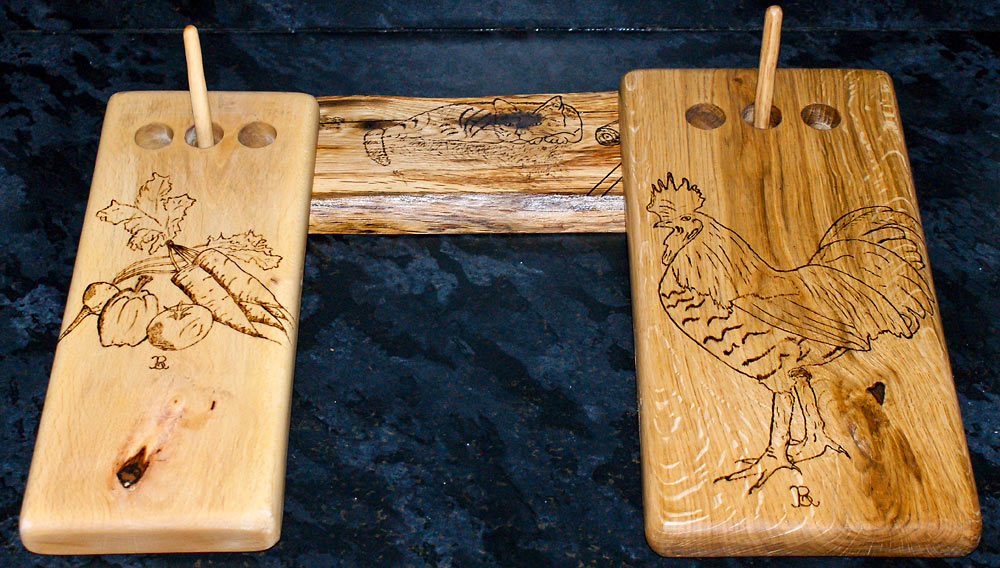
I have just finished two chopping boards and a hanger for them; there is one from beech (this will be used for vegetables) and one from oak (for meat). There’s a give-away on the boards that suggests what each one should be used for! The hanger is made of oak and I decided to make the pegs from the same materials as each board.

Ross' Handmade Chopping Boards

Ross’ Handmade Chopping Boards

Continue reading

The Perfect End to a Beautiful Season

This week marks the end of the UK course season at Woodlore.

Our first course this year, the Advanced Tracking that took place in April seems so long ago and so much has happened since then. We have run a wide variety of exciting Bushcraft courses throughout East Sussex and further afield, meeting and enjoying spending time with clients from all walks of life.

Woodlore courses

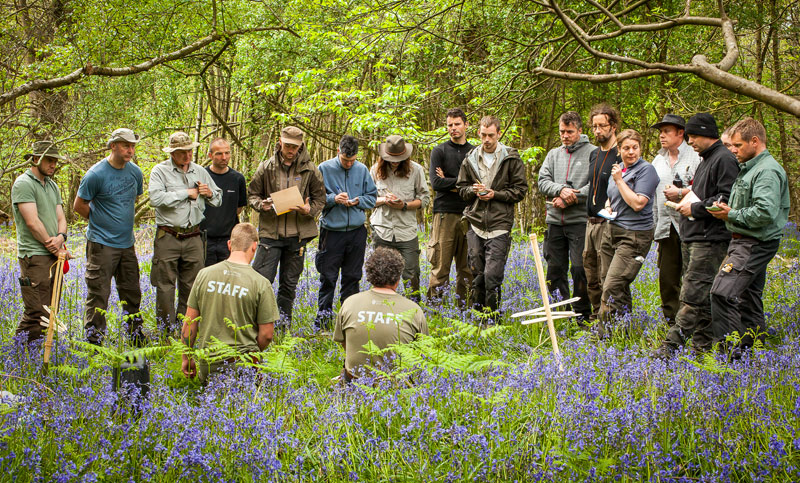
Woodloreans taking notes during the salmon lecture on the Woodlore Fundamental Bushcraft course

Continue reading

Can You Match the Deer Species?

The following post was written by Woodlore Senior Assistant Ross Burt:

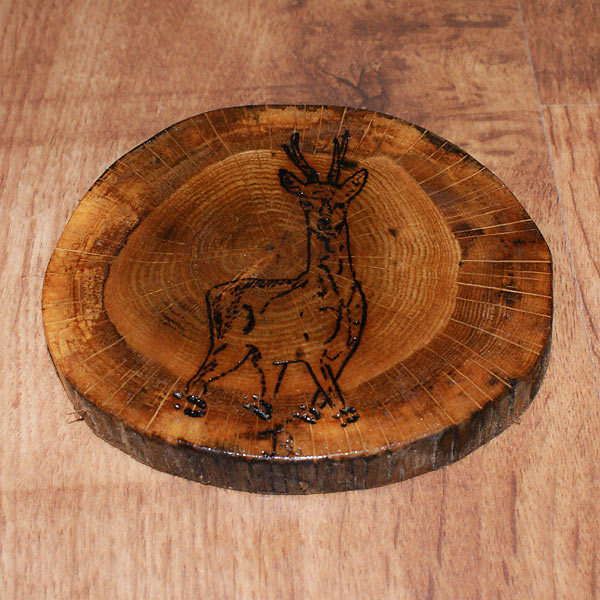
During the year and especially the winter months I produce my artwork to sell; I call this my ‘Bush Art’. During a Fundamental Bushcraft course on which Tom and I were working, a large beech tree fell and landed on a yew tree. One of the limbs that was smashed off was used by us to produce some coasters.

Some time later, I was sitting in a wood and it suddenly occurred to me that coasters usually come in a pack of six, now we have six species of deer in the UK! I popped out and used some beautiful oak for the ones shown below.

Ross Burt - Deer Coaster 4

Coaster #1

Continue reading

Richard Spencer Shares his Finished Knife Handles

It’s been a while since we shared any of your creations, so we thought we’d come back with a bang. Australian customer Richard Spencer displays not one, but two of his knife handles, made using the classic Hand Forged Knife Blade:

Dear Team,

What’s better than one of Julius Pettersson‘s blades? More than one! I am very lucky to have two of them:

A fine-looking pair of hand-finished knives

A fine-looking pair of hand-finished knives

The lower blade is set in the traditional way, with antler segments separated by some oiled birch in the middle and the tang hammered at the end. This was great fun, but it is possible to avoid all the filing and drilling – start haunting second-hand market stalls…

I found the top handle in a car boot sale. The blade to which it belonged had rusted very badly and it took almost no effort to remove the old corroded loose tang and so rescue the horn, alloy and some of the leather segments.

There’s a section of epoxy putty behind the guard to get the spacing right and there was a very large hole in the horn handle, so the Pettersson tang had to be set in epoxy, but it is rock solid. The nicest thing being that the old handle has been given new purpose.

Very best wishes to all of you!

Richard Spencer,

Northam, Western Australia

The Joy of Carving

The following post was written by Senior Assistant Mark Booton:

I am, if I’m being entirely honest, not a natural when it comes to carving. It is one of those Bushcraft skills which I need to work on. The fact that I find it challenging strengthens rather than diminishes my will to improve, and also heightens the enjoyment and satisfaction I feel when I carve something that I can be proud of.

I put down my knife and finish sanding my second Kuksa, a traditional wooden cup crafted by the Sami people of northern Scandinavia (my first attempt didn’t quite turn out as planned – my wife now very kindly refers to it as the ‘olive dish’!). I can remember the pride with which I took home my first carved spoon after attending the Fundamental Bushcraft course back in 2010. The fact that the spoon was not very good (misshapen and not symmetrical!) didn’t matter. I had toiled over it, sweated and bled (a little!), and eventually after several hours of sawing, carving and last-minute sanding produced something that, for all intents and purposes, resembled an eating implement… okay then, a spoon!

A traditional Swedish Kuksa cup

A Kuksa cup carved by Woodlore Senior Assistant Mark Booton

Continue reading